
Force, Work, and Lifting Basics: Simple Physics Behind Winches and Pulleys
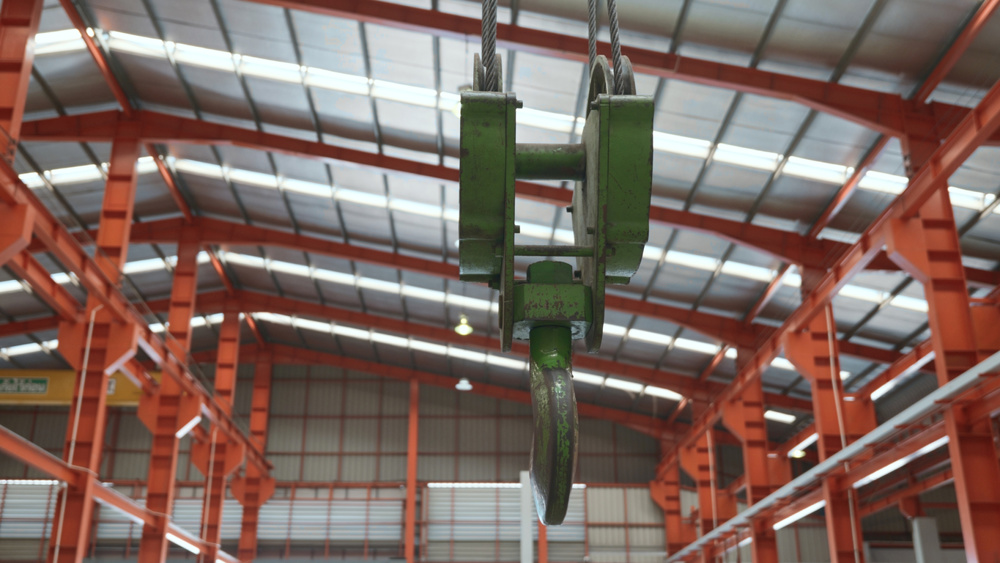
Lifting a heavy object looks simple on the surface. You pull a rope, crank a handle, or operate a winch, and the load rises. Behind that seemingly straightforward action, however, lies a set of physics principles that engineers, mechanics, construction workers, and hobbyists rely on every day. Concepts such as force, work, mechanical advantage, and load distribution determine how lifting systems function and why they make difficult tasks possible.
Understanding the relationship between force, distance, and mechanical advantage provides a foundation for understanding how lifting systems operate. Whether you're studying basic physics, planning a lift, or simply curious about how simple machines work, these concepts reveal why pulleys and winches remain some of the most useful mechanical tools ever created.
Force, Work, and Why Lifting Is Never Free
When physicists talk about work, they mean something very specific. Work occurs whenever a force moves an object through a distance. The equation is simple: work equals force multiplied by distance. If you lift a 100-pound object one foot, you've performed a certain amount of work. Lift that same object two feet, and you've performed twice as much work.
This principle leads directly to one of the most important ideas in mechanics: energy cannot be created for free. No pulley, winch, lever, or other simple machine can reduce the total amount of work required to raise a load. What these tools can do is change how that work is distributed. Instead of applying a large force over a short distance, you can apply a smaller force over a greater distance.
Imagine loading a heavy generator into a truck. You could attempt to lift it directly, requiring significant force in a short movement. Alternatively, you could use a pulley system that allows you to pull more rope while exerting less force. The generator still gains the same amount of height, and the total work remains essentially unchanged. Understanding this trade-off is the foundation of every lifting system and explains why mechanical advantage works.

How Pulleys Reduce the Mechanical Advantage You Need
A pulley creates mechanical advantage by distributing the weight of a load across multiple supporting rope segments. Instead of one section of rope carrying the entire load, several sections share the responsibility. This reduces the force a person must apply to raise the object.
The simplest pulley arrangement is a fixed pulley. A fixed pulley changes the direction of force but does not reduce the amount of force required. If a load weighs 100 pounds, you still need to apply approximately 100 pounds of force to lift it. However, pulling downward instead of upward can make the task easier and more comfortable.
Adding moving pulleys changes the situation dramatically. A system with two supporting rope segments provides a 2:1 mechanical advantage, meaning the required force is cut roughly in half. A four-segment system creates a 4:1 mechanical advantage, reducing the required force even further. These arrangements allow workers, mechanics, and operators to move loads that would otherwise exceed their physical capabilities.
Counting Rope Segments to Calculate Mechanical Advantage
One of the easiest ways to estimate mechanical advantage is by counting the number of rope segments directly supporting the load. In many pulley systems, that number closely corresponds to the theoretical mechanical advantage.
For example, a moving pulley supported by two rope segments provides a 2:1 advantage. If a load weighs 200 pounds, the operator theoretically needs to apply only 100 pounds of force. A system supported by four rope segments creates a 4:1 advantage, reducing the required force to approximately 50 pounds under ideal conditions.
This simple counting method allows operators to evaluate a system quickly without performing complex calculations. Mechanics, climbers, rescue teams, and construction workers frequently use this approach when assessing lifting arrangements in the field. While real-world factors such as friction reduce actual performance, counting rope segments remains one of the fastest ways to understand how a pulley system will behave.

The Distance Trade-Off That Comes With Every Pulley System
Mechanical advantage always comes with a cost. While a pulley system can reduce the force required to lift a load, it increases the distance over which that force must be applied. This trade-off is a direct consequence of energy conservation.
Consider a 4:1 pulley system lifting a load two feet. Because the system provides a four-to-one mechanical advantage, the operator must pull approximately eight feet of rope. The force decreases, but the distance increases proportionally. The total amount of work remains roughly the same.
This relationship influences how lifting systems are designed. High mechanical advantage systems are ideal for moving very heavy loads, but they can be slower and require more rope travel. Lower mechanical advantage systems allow faster lifting but require greater force. Selecting the appropriate arrangement depends on the weight of the load, available space, and the physical capabilities of the operator.
How Winches Apply the Same Mechanical Advantage Principles
Although winches look very different from pulley systems, they rely on many of the same principles. A winch uses a rotating drum and handle or motor to convert force into controlled pulling power. As the drum turns, rope or cable wraps around it, allowing the load to move.
Mechanical advantage in a winch often comes from gear reduction. A smaller gear driving a larger gear allows the operator to apply less force while increasing torque. This is similar to how a pulley system reduces required pulling force by increasing rope travel. In both cases, force and distance are being exchanged.
Winches appear in a wide variety of applications. Boat trailers use hand winches to pull vessels onto trailers. Off-road vehicles use electric winches for recovery operations. Construction equipment relies on powerful winches to move heavy materials safely and efficiently. Despite their different designs, all of these systems apply the same underlying physics principles.
Why Load Ratings Matter More Than Mechanical Advantage
Mechanical advantage can reduce the force required to lift a load, but it does not increase the strength of the equipment being used. Every rope, cable, pulley, hook, and anchor point has a maximum load it can safely support. Ignoring those limits can result in equipment failure even when the lifting system appears to provide sufficient mechanical advantage.
This is why load planning is such an important part of safe lifting operations. Operators must consider not only the weight of the load but also the capacity of every component involved. A pulley arrangement may reduce pulling effort dramatically, but overloaded hardware remains vulnerable to breaking under stress. Before selecting equipment, many operators use a force calculator to estimate the forces acting throughout the system and better understand how load weight and mechanical advantage affect individual components.
Professional lifting operations use working load limits and safety factors to account for unexpected conditions. Dynamic forces, sudden movements, uneven loading, and equipment wear can all increase stress beyond theoretical calculations. Understanding load ratings is therefore just as important as understanding mechanical advantage itself.
How Friction and Real-World Losses Reduce Pulley Efficiency
Both pulleys and winches promise mechanical advantage, but real systems never fully deliver on that promise. Every time rope moves across a sheave or axle turns inside a housing, a portion of the input energy is lost to friction rather than being converted into useful lifting work. While theoretical calculations often assume perfect efficiency, actual lifting systems always experience some degree of performance loss.
You lose additional efficiency through rope stretch, which absorbs force that should be lifting the load. Over time, bearing wear increases internal resistance, meaning you'll apply more effort simply to overcome the machine itself. Dirt, corrosion, and poor alignment can make these losses even worse. In enclosed winch systems, worn seals may allow moisture and contaminants to enter, accelerating wear and reducing performance further. Even small imperfections can have a noticeable effect when heavy loads are involved.
These losses accumulate quickly. A pulley system with a theoretical mechanical advantage of 4:1 may perform closer to 3:1 under real working conditions. This is one reason engineers and operators rarely rely solely on ideal calculations when planning lifts. Regular maintenance helps minimize efficiency losses. Lubricating bearings, inspecting ropes and cables, replacing worn components, and keeping systems properly aligned all contribute to safer operation and more predictable lifting performance.
How Pulleys Fit Into the Family of Simple Machines
Pulleys are one of six classical simple machines that engineers use to modify force and motion. The others include levers, inclined planes, wedges, screws, and wheel-and-axle systems. Although each operates differently, they all share the same purpose: making work easier by changing how force is applied.
A lever allows a smaller force to move a larger load by increasing distance from a pivot point. An inclined plane reduces the force required to raise an object by spreading the lift across a longer path. Pulleys accomplish a similar goal by distributing weight among multiple rope segments. In every case, the machine trades force for distance, direction, or convenience.
Studying simple machines together reveals an important lesson about physics. None of them create energy or eliminate work. Instead, they help users apply available energy more effectively. This common principle forms the foundation of mechanics and explains why simple machines remain relevant even in highly advanced technologies.
Why Understanding Lifting Physics Improves Safety
Understanding the science behind lifting systems is not just an academic exercise. It has practical safety benefits that apply to workshops, construction sites, recreational activities, and home projects. Misunderstanding forces and load distribution can lead to equipment damage, dropped loads, and serious injuries.
People often underestimate how quickly forces can increase when loads shift unexpectedly. A rope that appears strong enough under normal conditions may experience much greater stress if a load swings, jerks, or becomes unbalanced. Knowing how force travels through a lifting system helps operators identify potential hazards before they become dangerous situations.
Even basic knowledge of work, force, friction, and mechanical advantage can improve decision-making. Whether you're using a small hand winch, setting up a pulley system, or planning a larger lift, understanding the physics involved encourages safer practices and more effective use of equipment.
Conclusion
Pulleys and winches may seem like simple tools, but they demonstrate some of the most important principles in physics and mechanics. By redistributing force across greater distances, these systems allow people to lift, move, and control loads that would otherwise be difficult or impossible to handle safely.
Understanding concepts such as work, mechanical advantage, friction, and load distribution helps explain why these devices remain essential in construction, transportation, manufacturing, and countless everyday applications. Recognizing how force, distance, and energy interact provides a stronger foundation for both practical problem-solving and a deeper appreciation of how simple machines make modern work possible.