What Are Glider Planes Used For?
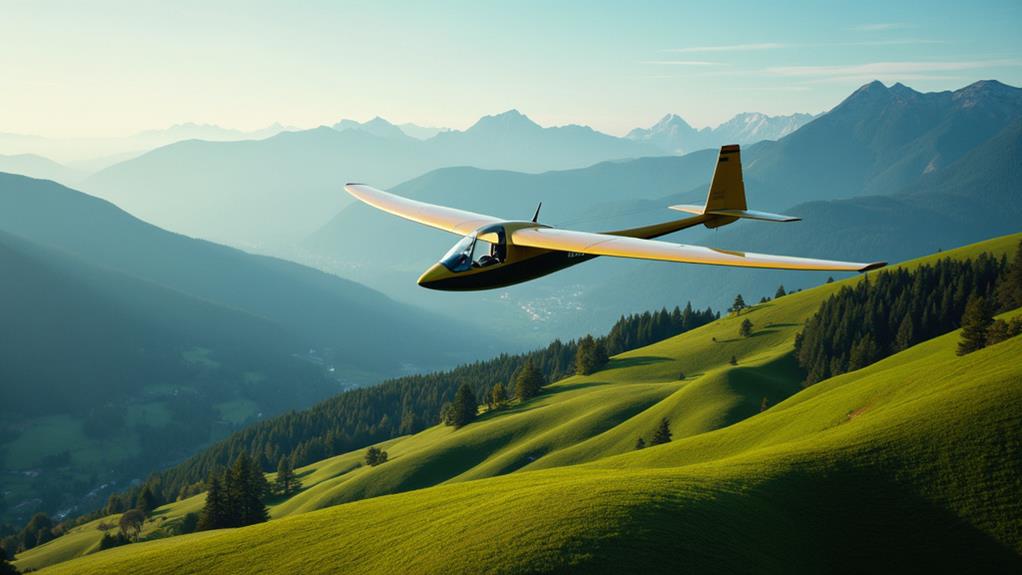
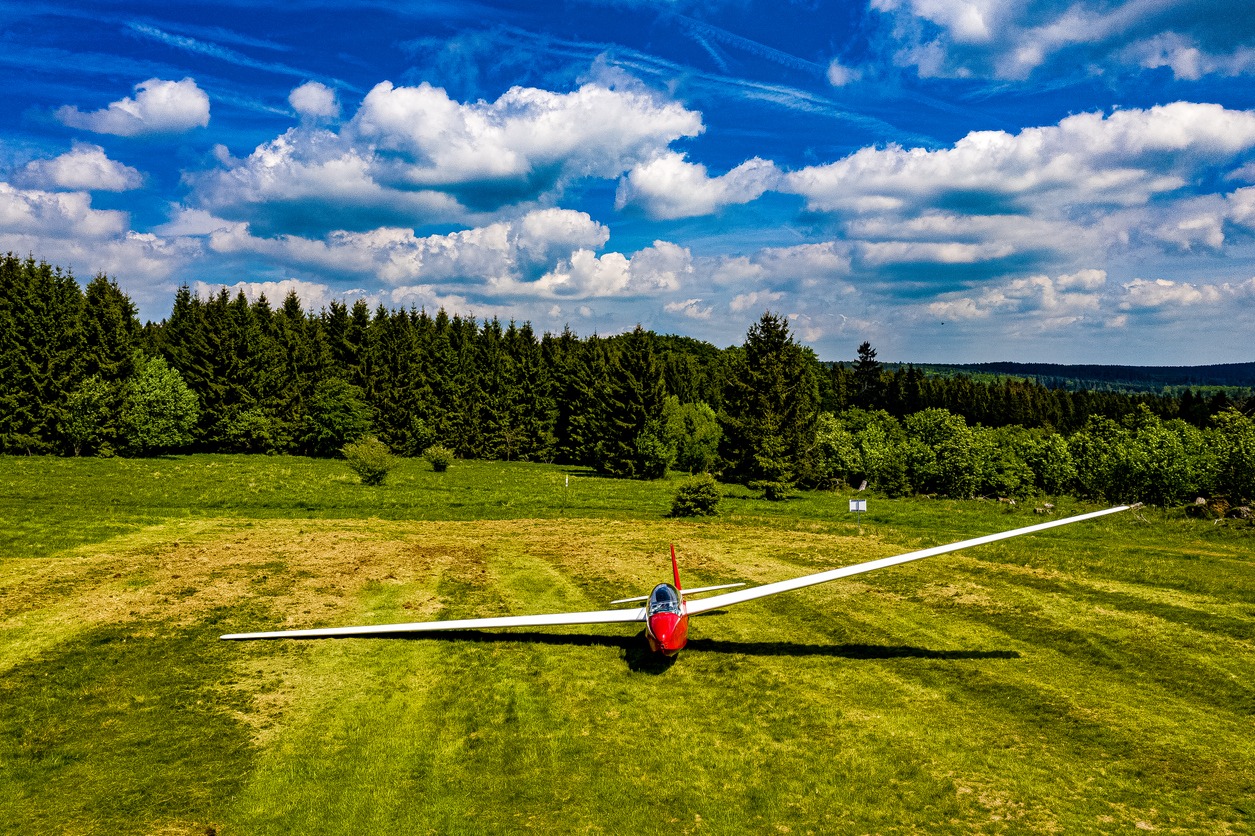
You might wonder what glider planes are really used for beyond just a casual hobby. These engine-less aircraft offer a unique blend of recreation, competition, and scientific research. Imagine soaring through the sky, relying solely on natural air currents—not just for thrill-seekers. Competitive gliding challenges pilots' navigation and strategy skills, while scientists utilize gliders to gather essential atmospheric data and monitor wildlife behavior. These silent fliers are versatile, excelling in various roles due to their reliance on natural forces and advanced engineering.
Historical Significance
Glider planes hold significant historical importance, tracing back to the late 19th century when aviation pioneers explored unpowered flight. Otto Lilienthal's successful manned flights in 1891 marked a milestone in aviation history. His achievements demonstrated the feasibility of controlled, sustained gliding and laid the foundation for future advancements.
The Wright brothers' 1902 glider, featuring movable control surfaces, was another pivotal development. This innovation was crucial for the advent of powered flight, illustrating how glider technology influenced modern aviation. Their glider highlighted the practical applications of unpowered flight and set the stage for their subsequent achievements.
During World War II, gliders were instrumental in military operations, notably in transporting troops and supplies. Their capability to silently deliver large numbers of soldiers and equipment made them essential for tactical missions, underscoring their strategic value.
As glider technology advanced, improvements in aerodynamics and materials enhanced their performance and safety. Today, gliding has evolved into a competitive sport, promoting community engagement and skill development. This progression from historical experimentation to contemporary sport underscores the lasting significance of gliders in aviation history.
Design and Mechanics
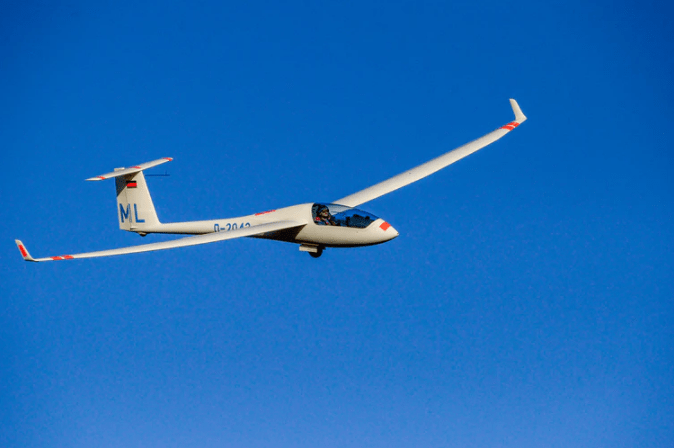
When you immerse yourself in the world of glider planes, you'll discover their design and mechanics are marvels of engineering. Gliders are non-powered, heavier-than-air craft that rely solely on aerodynamic principles to stay aloft. Their elongated wings are crucial, providing the necessary lift to sustain flight. These wings often incorporate mechanisms for precise control of movement, enhancing both performance and responsiveness.
Stability is another key aspect of glider design. The tail surfaces play a significant role in maintaining balance and stability, ensuring smooth, controlled flight. Control mechanisms, including ailerons and rudders, are fundamental for maneuverability, allowing you to steer and adjust the glider's trajectory with precision.
The flying speed required to achieve lift varies depending on the specific design and configuration of the glider. This variability affects the glider's overall performance and efficiency. Different launching techniques, such as aerotow and winch tow, are used to achieve the initial velocity needed for lift. However, it is the glider's aerodynamic design that ultimately determines its ability to soar gracefully through the sky without an engine.
Launch Techniques
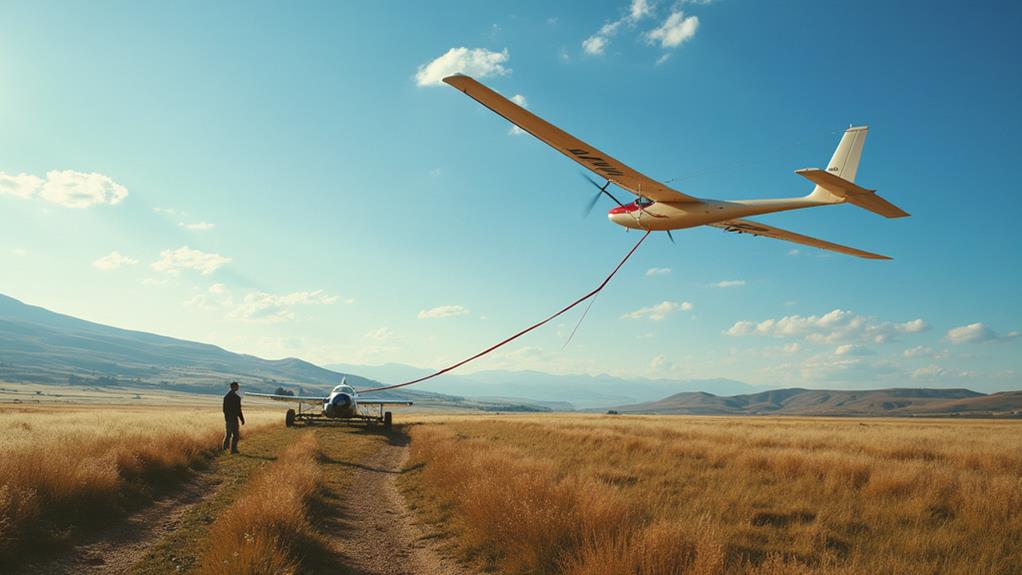
Understanding how glider planes are launched is as fascinating as their design and mechanics. Given that gliders lack engines, several innovative launch techniques have been developed to get them airborne.
- Aerotow: The most common method is aerotow, where a powered aircraft tows the glider into the air. Once the glider reaches a suitable altitude, it's released to soar independently. This method offers flexibility in choosing launch locations and altitudes.
- Winch Launch: Another popular technique is the winch launch. A powerful cable system rapidly reels in the glider, accelerating it to approximately 50 mph in just three seconds. This method allows for a quick ascent directly above the airfield, making it an efficient launch technique.
- Shock-Cord Launching: Functioning like a giant slingshot, the shock-cord launch delivers an initial burst of acceleration, propelling the glider into the air without requiring a tow vehicle. This technique is straightforward and can be executed with minimal equipment.
These methods are designed to maximize the glider's capabilities, ensuring a safe and efficient takeoff despite the absence of an engine.
Recreational Use
Embarking on recreational gliding reveals the thrill of both soaring and cross-country flights, enabling you to traverse significant distances using natural air currents. You'll also have the opportunity to master aerobatic maneuvers and compete, demonstrating your skills among fellow enthusiasts. This sport uniquely combines tranquility and excitement, making it ideal for those eager to embrace the skies.
Soaring and Cross-Country Flights
Glider planes provide an exhilarating experience for those passionate about soaring through the skies without engine power. By mastering the art of soaring, you can utilize natural air currents like thermals to sustain flight for hours, allowing you to enjoy the serenity and thrill of being aloft while maneuvering with skill and finesse.
During cross-country flights, you can cover impressive distances by leveraging techniques such as ridge lift and wave lift. Imagine gliding for hundreds of kilometers, transitioning from one rising air current to another, all while taking in breathtaking landscapes from a unique vantage point. It's a true test of a pilot's ability to read the sky and make strategic decisions.
Here are three key aspects of soaring and cross-country flights:
- Efficiency: Soaring without engine power requires mastery of natural air currents, fostering a deep connection with the environment.
- Endurance: Cross-country flights can last several hours, presenting both a mental and physical challenge as you traverse long distances.
- Community: Engaging in gliding fosters camaraderie among enthusiasts, with local clubs and events creating a supportive network for sharing experiences and improving skills.
Soaring and cross-country flights offer a unique blend of challenge, peace, and community.
Aerobatic Maneuvers and Competitions
Aerobatic gliding offers an exhilarating blend of precision, skill, and artistry. Spectators are captivated by the intricate maneuvers pilots perform during competitions, which go beyond racing against the clock. These events involve executing loops, rolls, and other complex stunts, showcasing both the pilot's expertise and the glider's capabilities.
Competitions often require pilots to navigate routes spanning hundreds of kilometers, making mastery over thermals essential. Pilots strategically use these rising columns of warm air to gain altitude. The Fédération Aéronautique Internationale (FAI) governs many of these events, ensuring they meet global standards for fairness and safety.
Aerobatic gliding isn't just a sport; it's a vibrant community activity. Enthusiasts gather at these events to share their passion, exchange tips, and promote the discipline of gliding. The camaraderie and shared excitement create a unique atmosphere that's both competitive and supportive.
Whether you're a seasoned pilot or a spectator, the elegance and precision of aerobatic maneuvers make these competitions thrilling to experience. They are a testament to the pilots' skill and the remarkable capabilities of glider planes.
Competitive Soaring
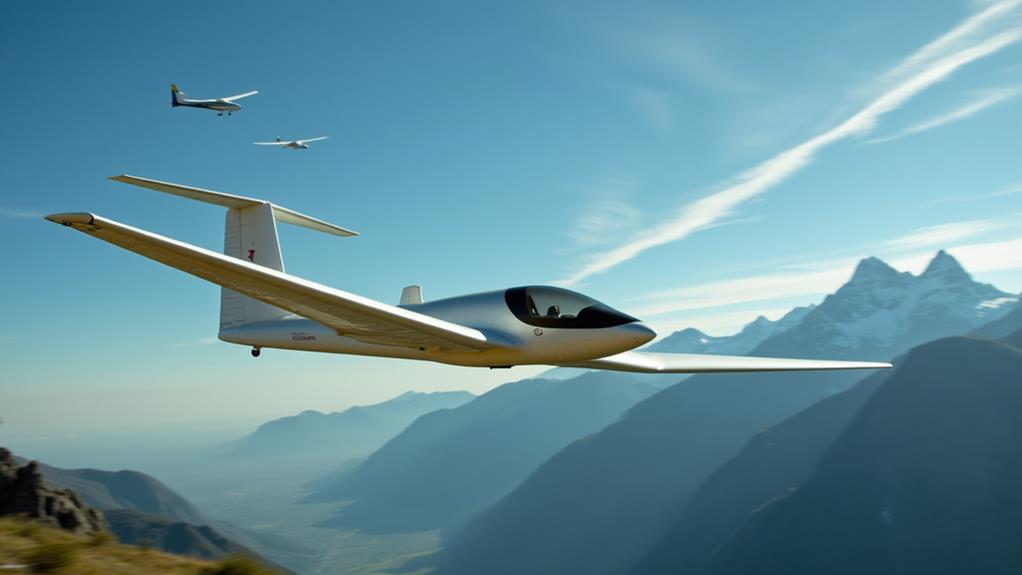
In competitive soaring, pilots navigate predetermined flight routes known as tasks, aiming to complete them in the shortest time possible. These tasks can cover hundreds of kilometers, testing both skill and strategy. Annual national and global competitions promote skill development and foster community engagement among pilots.
Race and Task Routes
Competitive soaring challenges pilots to navigate specific routes, known as tasks, that test both their skill and strategy. These tasks require pilots to complete routes in the shortest time possible, often covering diverse distances and locations. For instance, you might plan flights that take you from a starting airfield to distant destinations like the Isle of Wight. Here's what you need to know about race and task routes in competitive soaring:
- Cross-Country Flights: Your glider must be capable of handling long distances, utilizing weather phenomena such as thermals, ridge lift, and wave lift to gain altitude and maintain speed.
- Annual Competitions: These events occur at both national and international levels, where you compete against others to showcase your gliding prowess and potentially win titles in various categories.
- Strategic Weather Use: To optimize your performance, you must understand how to use weather conditions to your advantage, enhancing your altitude and speed during the race.
These competitions test not only your flying skills but also your ability to plan and execute complex tasks efficiently. Your glider must be well-maintained and equipped to handle the challenges posed by these demanding routes.
Skill and Strategy Development
To excel in competitive soaring, pilots must master both skill and strategy, effectively combining their knowledge of aerodynamics with tactical decision-making. Pilots navigate predefined routes, known as tasks, aiming to complete them in the shortest time possible. This necessitates proficiency in strategic planning and navigation.
Competitive tasks vary in length, with some exceeding 500 kilometers. Such distances test a pilot's endurance and ability to select the most efficient routes. Practicing these long flights enhances your capability to utilize natural lift sources like thermals, ridge lift, and wave lift, which is crucial for optimal performance.
During the winter months, practicing aerobatics can be beneficial. It not only involves performing complex maneuvers but also builds confidence and hones flying skills, making you a more versatile pilot. Annual national and global competitions provide structured environments to refine your abilities and learn from peers. By continuously challenging yourself and your aircraft in diverse conditions, you develop the necessary skills and strategies to succeed in competitive soaring.
National and Global Competitions
National and global competitions in competitive soaring attract elite pilots from around the world, eager to demonstrate their mastery of flight. These events require pilots to complete specific routes, known as tasks, in the shortest time possible. Tasks often involve challenging distances, such as flights to the Isle of Wight, testing pilots' navigation and strategy. A variety of aircraft, each optimized for different aspects of soaring, are utilized.
Annual competitions at both national and international levels are highly anticipated, providing pilots with a platform to showcase their skills. The tasks in these competitions vary in length and complexity, pushing pilots to effectively use thermals and other lift sources. During the winter months, when thermals are less reliable, some pilots engage in aerobatics to fine-tune their skills for the competitive season.
Competitive soaring events foster a strong sense of community among aviators. These gatherings encourage skill development, camaraderie, and the sharing of best practices. Key points to note include:
- Varied Tasks: Routes of different lengths and complexities.
- Skill Development: Winter aerobatics for preparation.
- Community: Fostering camaraderie and knowledge sharing.
In competitive soaring, the mastery of flight is celebrated and continually honed.
Scientific Research
Since 1935, gliders have been indispensable in scientific research, offering a unique advantage by collecting atmospheric data without engine noise interference. Equipped with diverse recording instruments, gliders gather real-time data on temperature, humidity, and wind speed. This data is crucial for accurate weather forecasting and understanding atmospheric conditions.
Gliders' silent flight capability makes them ideal for studying wildlife behavior and conducting ecological surveys in remote areas. This allows for more authentic observations without disturbing the natural environment. These aircraft are also used in environmental studies to monitor air quality and assess pollution dispersion, offering valuable insights for environmental protection efforts.
In addition to environmental and meteorological applications, gliders have significantly advanced our understanding of aerodynamics and flight mechanics. Research conducted using gliders has led to improved designs and performance, benefiting both recreational and scientific pursuits.
When considering gliders, remember their critical contributions to scientific research—from weather forecasting and wildlife studies to environmental monitoring and aerodynamic advancements. They are not just about silent soaring; they are about expanding our understanding and protecting our planet.