The Importance of Aerodynamics in Glider Design
Aerodynamics plays a critical role in glider design. It directly affects how efficiently a glider moves through the air by influencing both lift and drag. Fine-tuning elements like wing shape and airfoil profiles can significantly enhance a glider's performance.
Achieving the perfect balance between lift and drag is complex. Specific design considerations essential for ensuring ideal stability and control include wing aspect ratio, airfoil selection, and weight distribution. Understanding airflow dynamics is crucial, as it can make or break a high-performance glider.
Lift and Drag
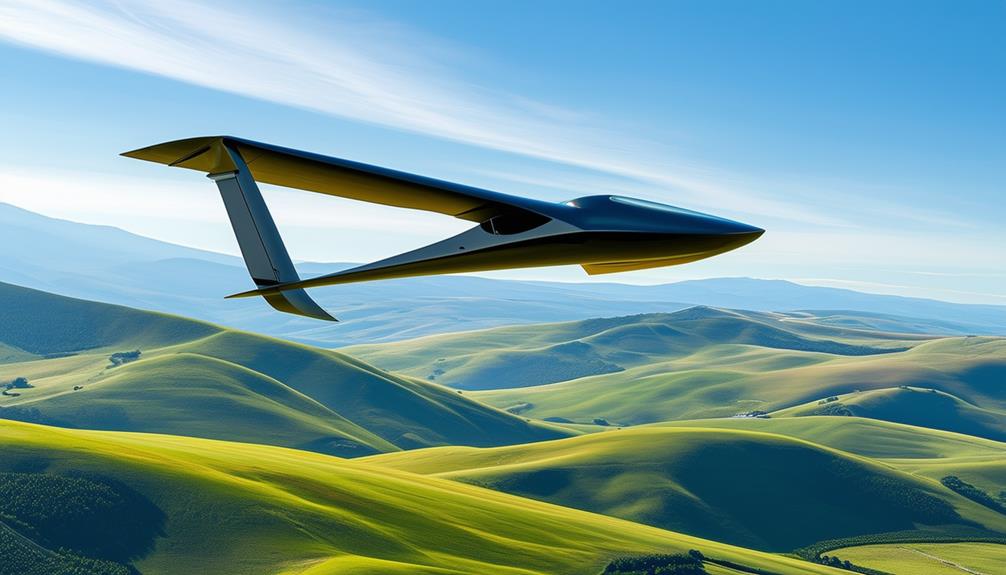
When designing a glider, understanding lift and drag is crucial for optimal flight performance. Lift is generated by the wings due to pressure differences between the upper and lower surfaces, allowing the glider to overcome its weight and achieve flight. To optimize lift, careful design of the wing shape and angle is necessary.
However, generating lift also creates drag, which opposes the glider's forward motion. Balancing lift and drag is essential. Excessive drag reduces efficiency and shortens flight duration, while inadequate lift prevents the glider from staying aloft.
Optimizing the aerodynamic profile of the wings can improve lift and minimize drag by using smooth, streamlined surfaces and precise wing angles. Understanding and managing these forces improve the glider's performance and stability. Mastering the interplay between lift and drag is foundational for a successful and efficient glider design.
Glide Ratio Optimization
Achieving peak flight efficiency necessitates a focus on glide ratio optimization, which quantifies how far a glider can travel horizontally for each unit of altitude it loses. For instance, a glide ratio of 40:1 indicates that the glider can cover 40 units of distance for every unit of altitude lost, demonstrating superior aerodynamic efficiency.
To optimize the glide ratio, reducing drag and maximizing lift are critical. Streamlined designs play a significant role in this optimization. By minimizing surface irregularities and employing sleek shapes, drag can be significantly reduced.
Additionally, fine-tuning the airfoil shape and wing design helps achieve the optimal balance between lift and drag. Variations in these design elements can substantially impact the glider's performance.
A well-optimized glide ratio allows for extended flight times and greater range, crucial for maximizing the glider's potential. High aerodynamic efficiency not only enhances performance but also improves the overall flying experience.
Airflow Dynamics
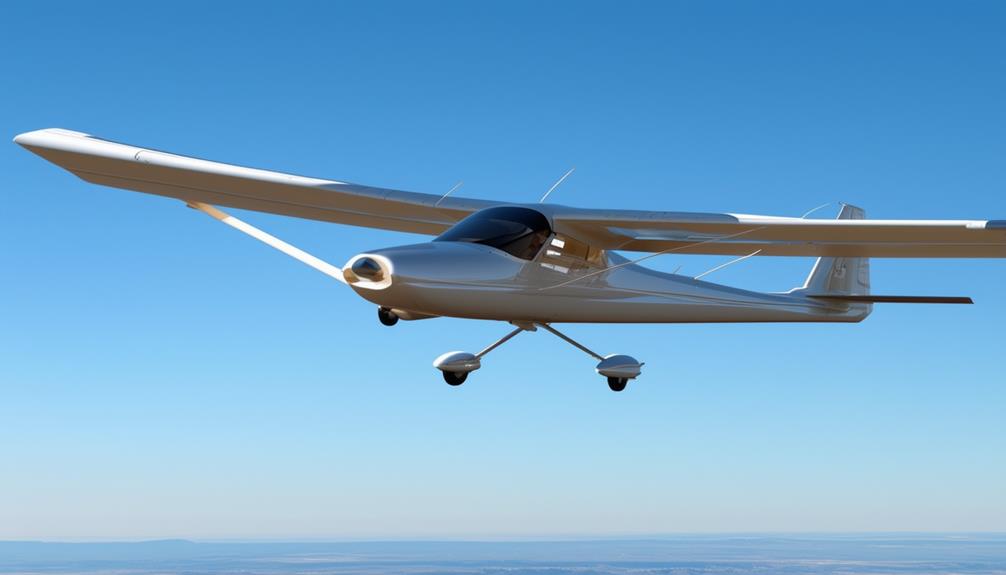
Understanding airflow dynamics is crucial for optimizing a glider's lift and minimizing drag. By comprehending how air moves over the wings and control surfaces, you can fine-tune the design to achieve the desired flight characteristics. Smooth airflow is essential for maintaining stability and control across different flight phases, from takeoff to landing.
The interaction between air and your glider's surfaces directly impacts lift and drag. Lift is generated by pressure differences on both sides of the wings, while drag is the resistance your glider encounters as it moves through the air. To optimize efficiency, managing these forces carefully is key.
By ensuring smooth airflow patterns, you enhance the glider's performance and maneuverability. Aerodynamic principles guide the design of wings and control surfaces to channel air effectively, optimizing lift and minimizing drag. This balance is essential—you need sufficient lift to stay aloft without excessive drag slowing you down.
Effective airflow management extends beyond the wings to the entire structure. Every surface that interacts with the air affects overall performance. By focusing on airflow dynamics, you lay the groundwork for a high-performing glider that excels in various flight conditions.
Design Considerations
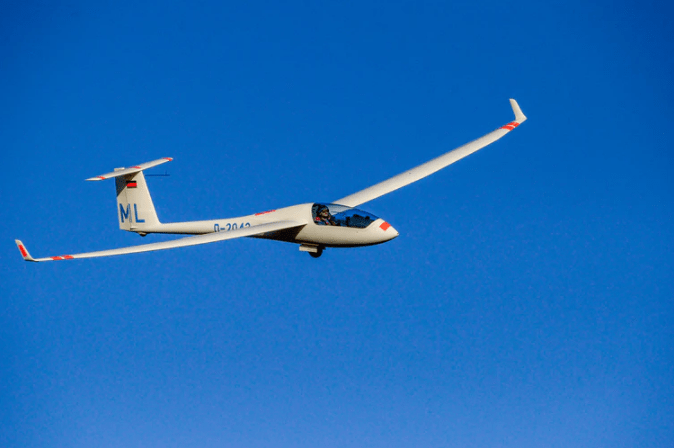
Effective glider design hinges on optimizing wing shape, aspect ratio, and airfoil profile to achieve an optimal balance between lift and drag. These factors interact closely to maintain altitude and minimize drag. The wing's shape and aspect ratio directly influence the airflow, impacting lift generation. Generally, a higher aspect ratio results in better lift-to-drag ratios, essential for sustained flight.
Proper weight distribution and center of gravity (CG) placement are equally significant. Correct CG placement ensures the glider remains balanced and performs efficiently. Using materials like carbon fiber composites helps keep the glider lightweight yet strong, aiding in achieving optimal altitude.
Key considerations include:
| Aspect | Influence | Importance |
|---|---|---|
| Wing Shape | Affects lift and drag | Critical for efficient flight |
| Aspect Ratio | Improves lift-to-drag ratio | Vital for sustained altitude |
| Center of Gravity | Ensures balance and control | Key for stability |
Additionally, incorporating aerodynamic features like winglets and fairings can further reduce drag, enhancing efficiency. By focusing on these design elements, you can create a high-performance glider that maintains consistent altitude.
Stability and Control
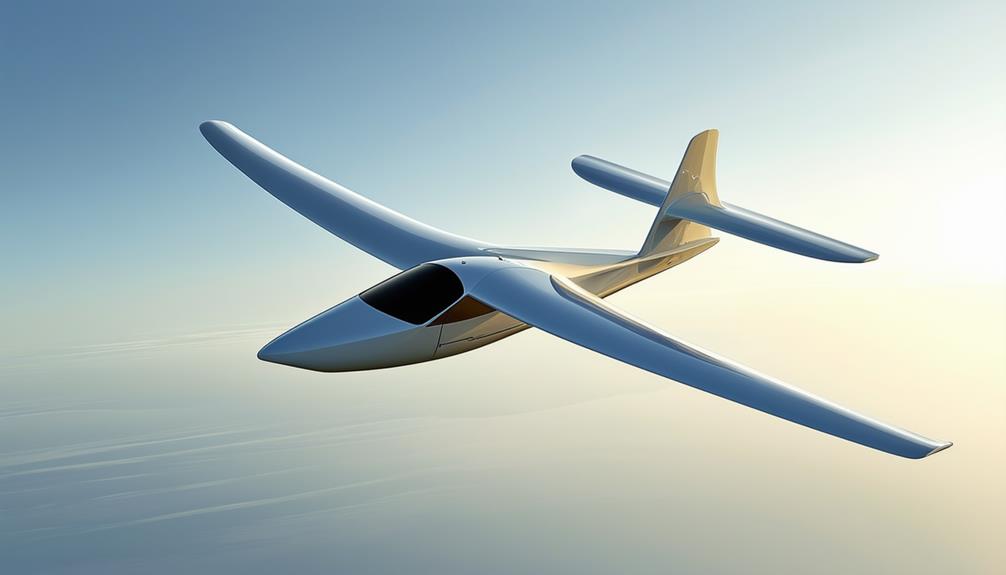
Ensuring stability and control in gliders is crucial for maintaining safe and predictable flight behavior. Longitudinal stability, which helps a glider return to its original pitch after a disturbance, relies on the balance between the center of gravity and the aerodynamic center. Adjusting the angle of attack directly influences this balance and thereby affects the glider's stability.
Lateral stability ensures that the glider can return to level flight after experiencing roll disturbances. This is vital for maintaining control, especially in turbulent conditions. Design features like dihedral wings enhance lateral stability by generating a restoring force when the glider rolls. Vertical stability is managed through the design of the vertical stabilizer and the rudder, which help the glider return to equilibrium after yaw disturbances.
Induced drag impacts all aspects of stability. While it can't be eliminated, understanding its effects helps in making better control decisions, particularly when using control surfaces like spoilers and flaps. These surfaces adjust lift and drag, aiding in managing the glider's stability during takeoff, flight, and landing.
Conclusion
The significance of aerodynamics in glider design is paramount. Mastering lift and drag, optimizing the glide ratio, and fine-tuning airflow dynamics ensure optimal performance. Critical design elements such as aspect ratio and weight distribution are essential for achieving stability and control. A deep understanding of aerodynamic forces allows for the creation of high-performance gliders with extended flight times and exceptional maneuverability. Aerodynamics plays a crucial role in attaining superior glider performance, and its impact shouldn't be underestimated.