How Does a Glider Plane Take Off?
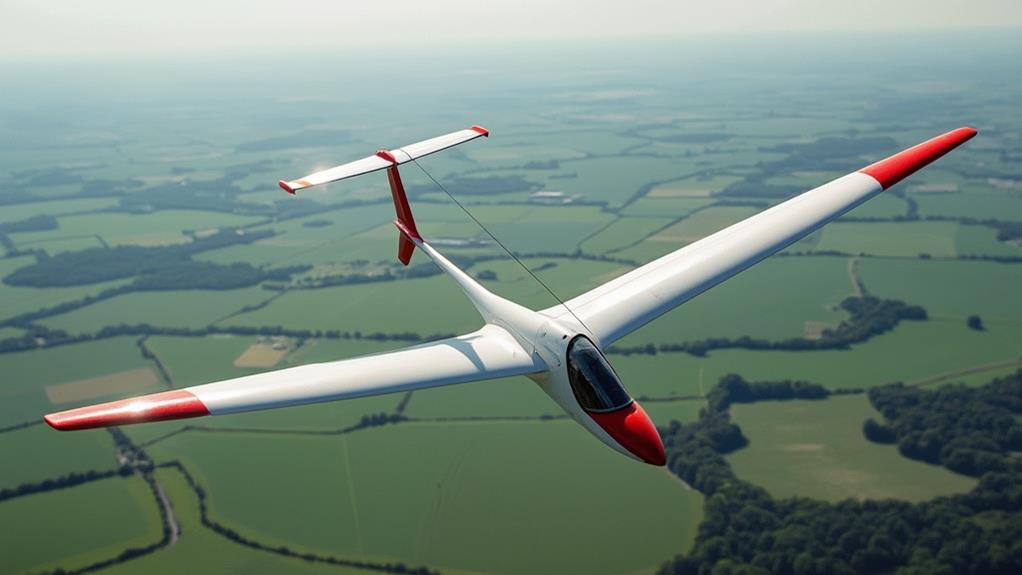
When considering how a glider plane takes off, two primary methods come to mind: the tow plane method and the winch launch technique. The tow plane method utilizes a powered aircraft to pull the glider into the sky via a long rope. Alternatively, the winch launch technique employs a powerful ground-based motor to rapidly reel in a cable attached to the glider. Both methods depend on clear communication and precise control to ensure a smooth ascent. Let's explore how these techniques work and the role each component plays in this intricate process.
Types and Launch Methods
When launching a glider, several methods are available, each with distinct advantages. One common method is using a tow plane, where a powered aircraft tows the glider via a 60-meter (200-foot) rope. Before takeoff, you signal the tow plane by moving the rudder left and right. Upon reaching the desired altitude, a quick-release mechanism allows you to detach from the tow plane, enabling you to glide freely.
Another effective method is a winch launch. In this approach, a ground-based engine pulls the glider using an 800-1,200 meter (2,600-3,900 foot) cable, facilitating a rapid ascent. This method can achieve heights between 270-910 meters (900-3,000 feet), depending on headwind conditions. Winch launching is efficient for quick climbs but requires ensuring that specific control settings are properly configured to avoid operational issues.
Understanding these launch methods and their operational requirements is crucial for optimizing your glider flights. Both tow plane and winch launch methods offer unique benefits tailored to different flying conditions, allowing you to choose the best option for your needs.
Historical Context
The roots of glider flight trace back to the pioneering experiments of Sir George Cayley in the early 19th century. Cayley designed the first successful manned glider in 1849, laying the groundwork for future innovations. Otto Lilienthal, often called the "father of modern aviation," made significant strides in the 1890s with weight-shift control, enabling glider pilots to manage altitude more effectively.
In the early 20th century, the Wright brothers built on these early designs by incorporating movable surfaces, crucial for controlling flight. This innovation led to their historic powered flight in 1903. Gliding continued to evolve, particularly after World War I. Facing restrictions on powered aircraft, Germany saw a resurgence in gliding, with the government supporting its development, propelling the sport forward.
Design Features
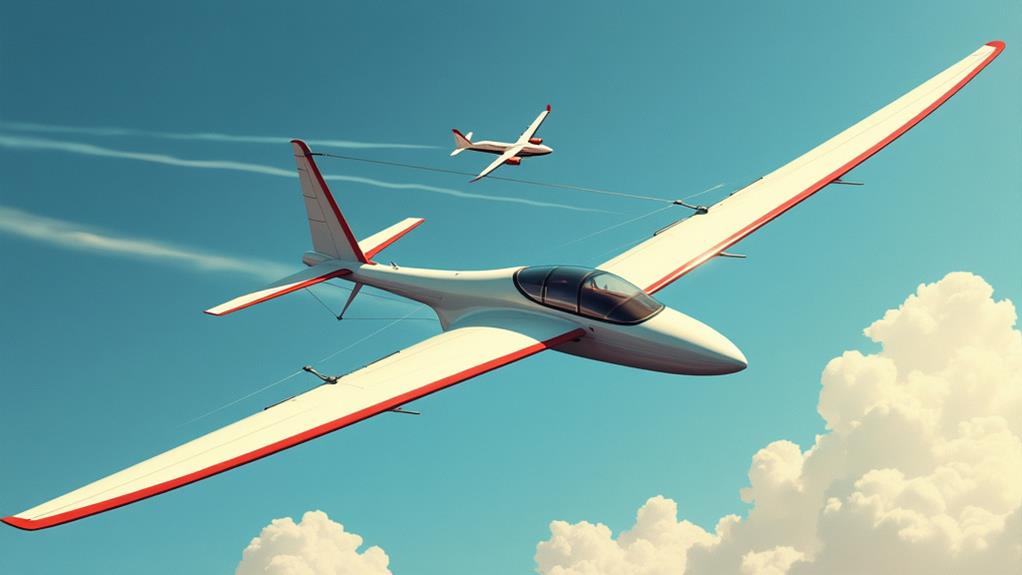
Modern gliders, building on a rich history of glider flight, incorporate advanced design features that significantly enhance their performance. A key feature is their long, narrow wings, which are engineered to maximize lift and minimize drag for efficient soaring. These wings typically exhibit high aspect ratios and winglets to further improve lift and reduce drag, crucial for maintaining altitude and extending flight duration.
The use of advanced materials like carbon-fiber and fiberglass is another vital aspect. These materials are lightweight yet strong, dramatically improving the glider's performance and handling. The lightweight construction allows for more responsive control, essential for precise maneuvering and achieving desired altitudes.
A noteworthy design feature is the quick-release mechanism located at the glider's nose. This mechanism allows for prompt detachment from the tow plane once the desired altitude is reached, facilitating a smooth transition to solo flight. Additionally, glider cockpits are designed for optimal visibility and control, enabling effective management of the flight path from takeoff to landing.
These combined features make modern gliders exceptionally efficient, user-friendly, and trustworthy for pilots.
Launch Procedures
When preparing for a glider launch, understanding the two primary methods—aerotow and winch launch—is fundamental for a successful takeoff. During an aerotow, a powered aircraft tows your glider to altitude using a 60m (200ft) rope. As the glider pilot, you signal the tow plane to take off by moving the rudder left and right. This movement is crucial for clear communication. Once at the desired altitude, you release from the tow plane using the quick-release mechanism located in the glider's nose.
Alternatively, winch launching involves a ground-based engine rapidly pulling your glider skyward with an 800-1,200m (2,600-3,900ft) cable. This method allows for a quick ascent, reaching heights of 270-910m (900-3,000ft) depending on wind conditions. It is essential to confirm that your controls for releasing the winch or initiating the tow are properly set up, as default settings might not include these necessary actions. Proper preparation and understanding of these launch procedures will help you achieve a smooth and efficient takeoff, setting the stage for an enjoyable flight.
Flight Dynamics
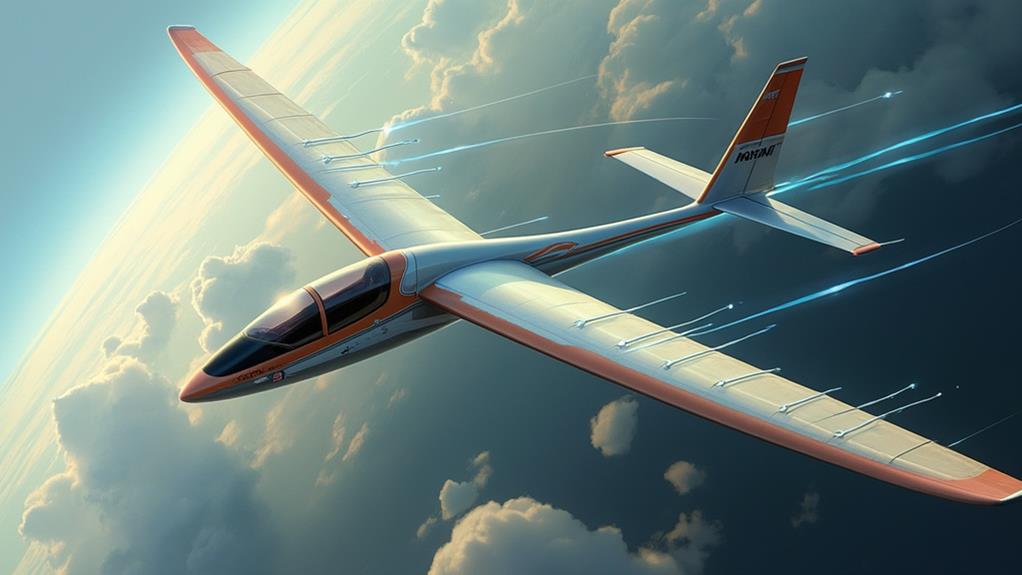
Having mastered the launch procedures, it's essential to understand the principles of flight dynamics that govern your glider's behavior once airborne. After being towed to a predetermined altitude by a powered aircraft, you will signal the tow plane for release, transitioning from powered flight to unpowered gliding.
During the tow, experiencing turbulence is normal. Managing your airspeed is crucial to ensure stability and prevent an uncontrollable descent. Once released, your glider relies on natural lift sources like thermals and ridge lift to gain and maintain altitude. Thermals are rising columns of warm air that can rapidly boost your glider, while ridge lift occurs when wind hits a mountain or ridge, providing a steady updraft.
Understanding these dynamics allows you to make informed decisions and optimize your flight path. By effectively utilizing thermals and ridge lift, you can significantly extend your flight duration. The key to successful gliding lies in your ability to manage these natural elements and adjust your strategy accordingly. Mastering these flight dynamics will not only enhance the safety of your flights but also increase your enjoyment of the gliding experience.