High-Altitude Cooking: Challenges and Techniques
Cooking at high altitudes presents unique challenges, as standard recipes often yield inconsistent results. The lower boiling point of water means pasta and eggs take longer to cook.
Baking can become tricky, with leavening agents like baking powder requiring precise adjustments. Food preservation also demands special canning methods recommended by the USDA.
How can you master these high-altitude cooking quirks without sacrificing flavor and texture? Let's explore techniques to ensure your meals are successful, regardless of elevation.
Key Takeaways
High-altitude cooking presents unique challenges due to reduced air pressure, which affects boiling points and cooking times. Increased evaporation rates necessitate covered cooking methods to maintain moisture and prevent dishes from drying out. Baking requires adjustments such as modifying leavening agents, increasing oven temperatures, and reducing baking times to achieve the desired texture. Small appliances like slow cookers and pressure cookers also need modifications in cooking time and liquid levels. Monitoring moisture levels and employing techniques like pressure canning are crucial for successful high-altitude cooking.
Understanding High-Altitude Effects
Cooking at high altitudes requires an understanding of how lower air pressure impacts boiling points and cooking times. At higher elevations, reduced atmospheric pressure causes water to boil at a lower temperature, meaning boiling water isn't as hot as it would be at sea level. This affects how food cooks, necessitating recipe adjustments.
Due to the lower boiling temperature, cooking times will be longer. This slower process can be challenging if you're unprepared. Additionally, lower atmospheric pressure increases moisture evaporation, which can cause dishes to dry out faster.
To succeed in high-altitude cooking, it's crucial to account for these factors. Whether boiling, baking, or simmering, understanding these unique challenges allows you to adapt your techniques.
Adjusting Cooking Times
At high altitudes, you need to extend cooking times to compensate for the lower boiling points of water. When water boils at a lower temperature, it takes longer to cook food through boiling or simmering. For instance, at 5,000 feet, cooking times may need to be increased by about 25%. This adjustment is vital for effective altitude food preparation.
Here's a quick guide to help you adjust cooking times at high altitudes:
| Altitude (feet) | Increase in Cooking Time |
|---|---|
| 3,000 | 10% |
| 5,000 | 25% |
| 7,500 | 50% |
In high-altitude areas, the boiling point of water drops, leading to faster water evaporation. This means you should cover your foods to retain moisture and prevent dryness. It's crucial to mention that the temperature at high altitudes affects not just boiling but also frying and microwave cooking. Therefore, adjusting cooking times across all methods is necessary.
Meat and Poultry Considerations
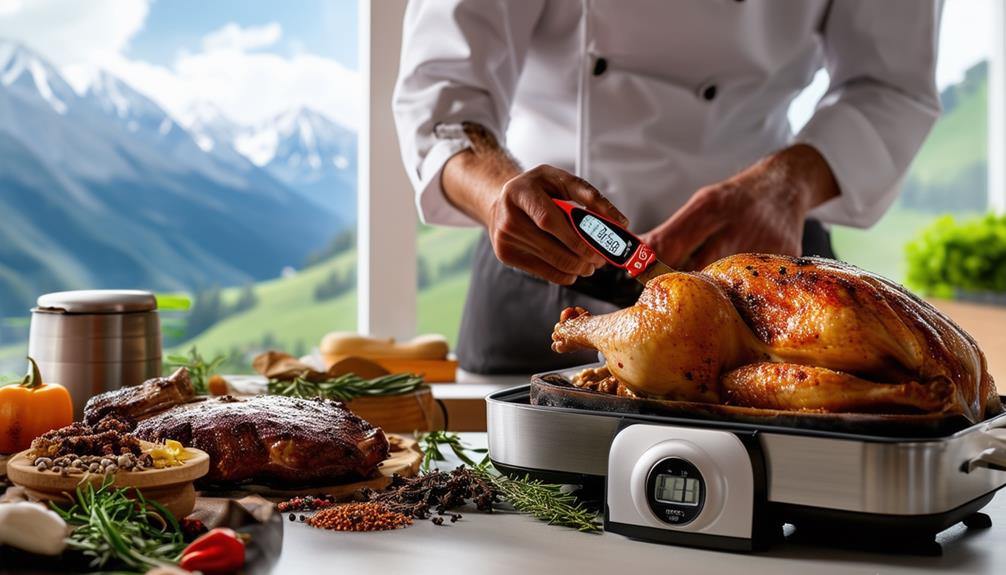
Cooking meat and poultry at high altitudes presents unique challenges due to lower air pressure and faster moisture evaporation, which can lead to dryness. To address this, you need to adapt your cooking methods.
Firstly, extend your cooking times. At 5,000 feet, increase simmering times by approximately 25%. This ensures that meat and poultry are cooked thoroughly, maintaining food safety while preventing dryness.
Consider using slow cookers with adjustable temperatures. These appliances allow for better control of the cooking environment, which is crucial for retaining moisture. Slow cookers help maintain tenderness and juiciness over extended cooking periods.
Pressure cookers are another excellent option for high-altitude cooking. They cook meat and poultry more quickly while retaining moisture, making them ideal for preventing dryness. With a pressure cooker, you can achieve tender, flavorful dishes without the prolonged cooking times that might otherwise dry out your food.
Proper cooking techniques are essential at high altitudes. Use methods that help lock in moisture and ensure even cooking. By adjusting your methods and utilizing slow cookers and pressure cookers, you can overcome the challenges of high-altitude cooking and enjoy succulent meat and poultry dishes.
Baking Modifications
When baking at high altitudes, you'll need to adjust ingredient ratios, tweak temperatures, and modify baking times to achieve optimal results. Utilizing altitude-specific tools can significantly improve the quality of your cakes, cookies, and breads.
Let's explore how these adjustments can help you perfect your baked goods.
Adjusting Ingredient Ratios
Successfully baking at high altitudes requires precise adjustments to ingredient ratios to ensure your treats rise correctly and maintain their intended texture. High-altitude baking presents unique challenges due to lower air pressure, so you need to tweak your recipes carefully.
Start by reducing leavening agents like baking powder and baking soda, as these can cause excessive rising and collapsing. Increasing liquids such as water, milk, or eggs helps counteract the quicker evaporation rates. Balancing ingredient ratios is key for achieving the proper texture and structure in your baked goods at high altitude.
Decrease the amount of sugar slightly, as lower air pressure causes sugar to become more concentrated, which can alter the texture. Adding a bit more flour can help stabilize the structure, preventing your treats from becoming too crumbly. If you're baking cookies with high sugar and fat content, they might spread too much. Adjust these ratios to get the desired outcome.
Including extra egg yolks can add moisture and richness, helping cakes and quick breads keep their shape. By making these careful adjustments, you'll ensure your high-altitude baked goods turn out just right, retaining top texture, rise, and flavor.
Temperature and Timing Tweaks
To perfect your high-altitude baking, you'll need to adjust both the temperature and timing of your recipes. At higher elevations, lower air pressure affects how your baked goods rise and set.
Here are some key adjustments to consider:
- Increase Oven Temperature: Raise the oven temperature by 15-25°F. This helps set the cell structure of your cakes and breads more quickly, preventing over-expansion.
- Reduce Baking Time: Monitor your baked goods closely and reduce the baking time by 5-8 minutes for every 30 minutes of the original baking time. Use visual cues like golden-brown tops and firm centers to check for doneness.
- Adjust Leavening Agents: Decrease the amount of baking powder or baking soda by 1/8 to 1/4 teaspoon per teaspoon to avoid excessive rising and collapsing.
- Modify Ingredients: Strengthen the cell structure by slightly increasing the amount of flour and reducing sugar and liquids. This helps maintain shape and moisture in your baked goods.
For foam cakes, reduce the amount of whipped egg whites to avoid an overly airy texture that could lead to collapse.
These small changes can make a significant difference when baking at high elevation. With these tips, you'll achieve perfect, consistent results every time.
Altitude-Specific Baking Tools
Using altitude-specific baking tools can significantly enhance your baking results at high elevations. High-altitude baking requires precise adjustments in leaveners, sugar, fat, and liquids to achieve optimal outcomes.
A reliable Thermapen allows you to accurately monitor sugar cooking temperatures, essential for confectionery and yeast fermentation in bread.
Given the unique atmospheric conditions at high altitudes, foam cakes need special care. Reducing the amount of whipped egg whites helps prevent excessive rising and collapsing. Visual cues for doneness are critical because baking times can vary considerably.
Investing in an oven thermometer ensures your temperature settings are accurate, aiding in necessary altitude adjustments for baked goods like cakes, cookies, and pie crusts.
Utilizing Small Appliances
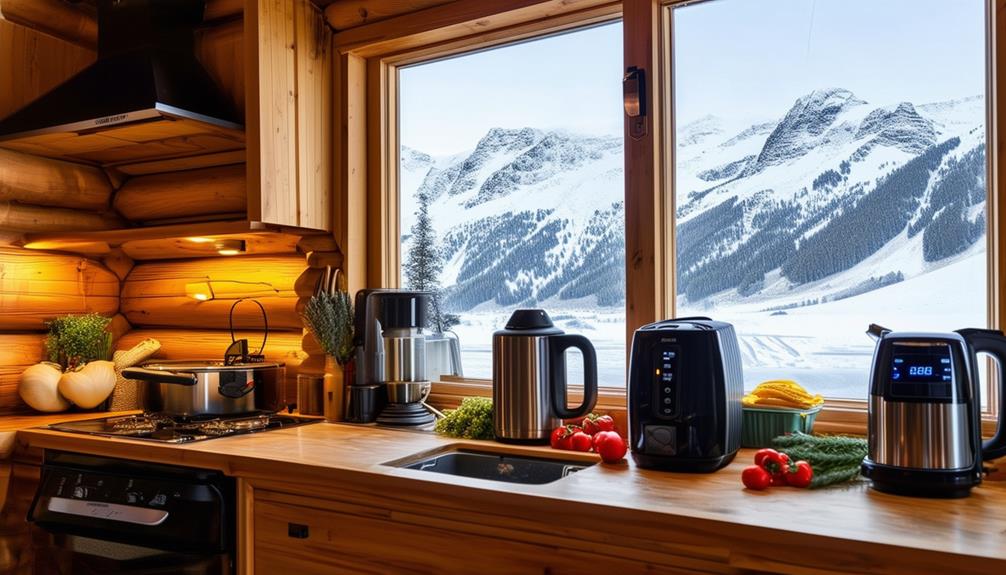
Small appliances like slow cookers, pressure cookers, and microwaves require specific adjustments to perform effectively at high altitudes. The thinner air and lower atmospheric pressure can affect cooking times and moisture levels, but a few adjustments can ensure your meals turn out perfectly.
For slow cookers, the reduced air pressure causes liquids to evaporate more quickly. To maintain proper cooking times and moisture levels, you may need to increase the cooking time or add extra liquid.
Pressure cookers are particularly beneficial at high altitudes as they retain moisture and their faster cooking times can compensate for the altitude's impact.
Microwaves may require shorter cooking times because liquids evaporate more rapidly at high elevations, which can lead to over-drying if not adjusted.
Here are some key tips:
- Slow cookers: Increase cooking times and add extra liquid to combat quicker evaporation.
- Pressure cookers: Utilize them to retain moisture and speed up cooking.
- Microwaves: Reduce cooking times to prevent over-drying.
- General tip: Monitor moisture levels closely and be prepared to make adjustments mid-cooking.
Understanding how these small appliances work at high altitudes can significantly improve your cooking results.
Home Canning Adjustments
When canning at high altitudes, it's crucial to adjust processing times and pressures to ensure food safety. Follow USDA-recommended methods to achieve proper sealing and sterilization of jars.
Using altitude-specific guidelines helps prevent food spoilage and bacterial growth effectively.
Altitude Impact on Pressure
High-altitude environments present unique challenges for pressure canning, necessitating adjustments to ensure food safety and preservation. The reduced atmospheric pressure at higher altitudes lowers the boiling point of water, requiring specific modifications to your canning process.
To adapt your canning methods:
- Increase pressure levels: Higher altitudes require elevated pressure levels in your canner to effectively eliminate bacteria.
- Follow USDA guidelines: The USDA provides detailed recommendations for adjusting pressure based on altitude to ensure safe canning practices.
- Check your equipment: Regularly ensure that your pressure canner's gauges or weights are accurately calibrated to maintain the correct pressure levels.
- Understand altitude impact: Be aware that the boiling point of water decreases at higher altitudes, making these adjustments necessary.
Adjusting Processing Times
Ensuring food safety during home canning at high altitudes requires adjusting processing times to account for lower boiling points. At higher elevations, decreased atmospheric pressure lowers the boiling temperature of water, which can result in under-processed and unsafe canned goods.
To maintain safety and effectiveness, you must increase the processing times specified in canning recipes according to altitude-specific guidelines. For example, if you're canning at an altitude above 1,000 feet, you'll need to add additional minutes to the processing time based on your exact elevation.
Consult reliable sources such as the USDA or your local Extension office for accurate adjustment information. These sources provide detailed charts indicating the extra time required for various elevations. Ignoring these guidelines can compromise food safety and preservation, potentially leading to foodborne illnesses.
Safety and Sterilization Tips
Ensuring safety and proper sterilization in high-altitude home canning requires meticulous adjustments in processing times and pressure levels, as well as thorough preparation of equipment. Adhering to USDA guidelines is crucial for preventing botulism and other foodborne illnesses.
Key considerations include:
- Increase Processing Times: At higher altitudes, water boils at a lower temperature, necessitating extended processing times to achieve proper sterilization.
- Adjust Pressure Levels: Use a pressure canner with an accurate gauge and adjust the pressure level according to your specific altitude.
- Sterilize Equipment: Ensure that jars, lids, and all equipment are thoroughly sterilized before use to maintain food safety standards.
- Boost Acidity: Foods like tomatoes and pickles may require added acidity to inhibit bacterial growth, especially at high altitudes.
Always consult USDA guidelines for altitude-specific adjustments to ensure adherence to best practices.
Proper adjustments and strict adherence to safety protocols are essential for maintaining the quality and safety of your canned foods at high altitudes.
Helpful Tips and Resources
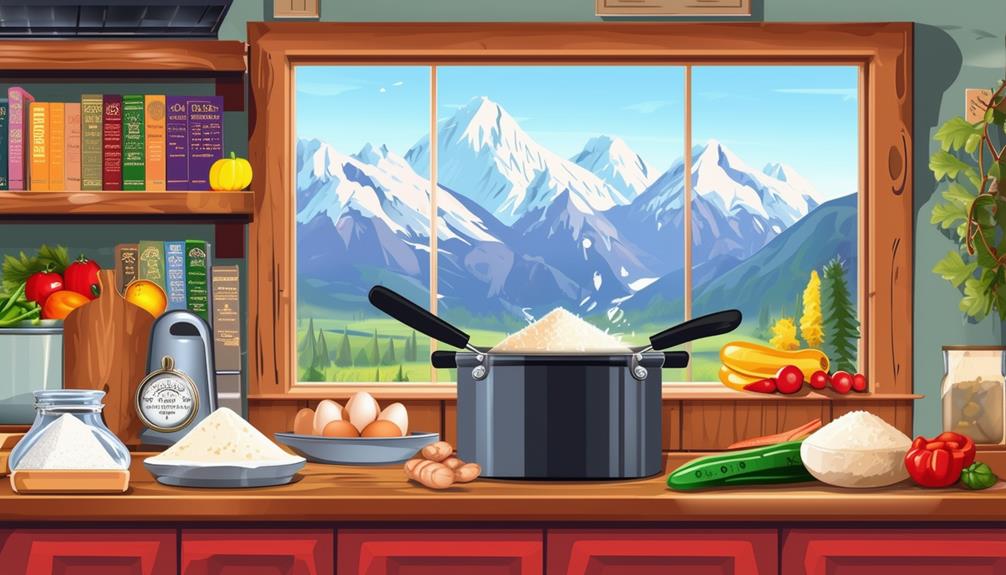
Cooking at high altitudes requires specific adjustments to ingredients and cooking methods for optimal results. The lower air pressure impacts cooking times and temperatures, necessitating changes to leavening agents, liquids, sugar, and flour. Here are some key tips to ensure your dishes turn out perfectly:
- Baking Adjustments: Modify leavening agents and baking times to account for high altitude.
- Temperature Control: Maintain safe food temperatures using chafing dishes, slow cookers, and ice to keep hot foods above 140°F and cold foods below 40°F. This prevents bacterial growth.
- Food Preservation: Follow USDA-endorsed canning methods to ensure food safety and prevent contamination.
For a quick reference, see the table below:
| Area | Tips and Adjustments | Resources |
|---|---|---|
| Baking Adjustments | Modify leavening agents and baking times | High-altitude cookbooks |
| Temperature Control | Use chafing dishes, slow cookers, and ice to maintain temps | Food thermometers |
| Food Preservation | Follow USDA-endorsed canning methods | USDA guidelines |
These adjustments and practices help ensure food quality and safety when cooking at high altitudes.
Conclusion
Mastering high-altitude cooking can seem daunting, but you're well-equipped to succeed! By adjusting cooking times, tweaking recipes, and using appropriate appliances, you can overcome the unique challenges.
It's crucial to modify leavening agents for baking, monitor moisture levels, and adhere to USDA-recommended canning methods. With these techniques, you'll create delicious meals regardless of elevation.
Stay patient, keep experimenting, and soon, high-altitude cooking will become second nature. Happy cooking!