Competitive Eating Contests: Pushing Limits in Food Competitions
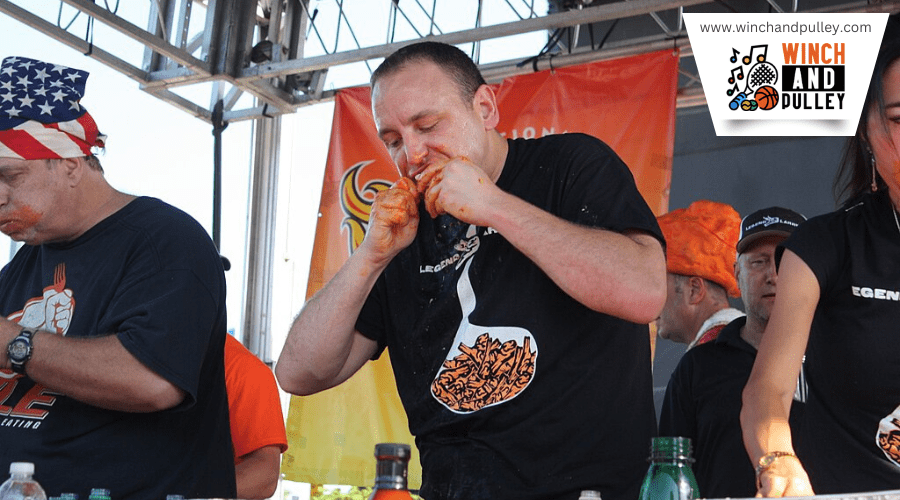
LegendLarrys, Joey Chestnut at the 2012 National Buffalo Wing Festival, Buffalo, New York, CC BY 2.0
Competitive eating contests might seem like mere spectacles of consumption, but they entail much more. These events require not only a remarkable physical capacity but also strategic thinking and rigorous training.
Contestants like Joey Chestnut and Miki Sudo prepare intensively for these challenges. You might wonder about the hidden health risks they face or the strategies they employ to set new records consistently. As the sport evolves, competitive eaters continue to push the boundaries of human potential in food competitions.
Key Takeaways
Competitive eating involves rigorous training to expand stomach capacity and develop unique techniques for speed eating. High-profile contests like Nathan's Hot Dog Eating Contest and Wing Bowl attract large audiences and significant media coverage. Record-breaking performances, such as Joey Chestnut's consumption of 76 hot dogs in 10 minutes, highlight the extraordinary capabilities of competitive eaters. However, health risks, including eating disorders and physical injuries, are substantial concerns within the competitive eating community. The future of competitive eating may include technological advancements, stricter health regulations, and the global expansion of events.
History of Competitive Eating
The history of competitive eating as a sport took a significant turn in the 1990s with the establishment of the International Federation of Competitive Eating (IFOCE). This organization was pivotal in transitioning competitive eating from a casual activity into a structured sport. By implementing formal rules and organizing over 100 major league eating events annually, the IFOCE played a key role in popularizing the sport. These events, offering nearly $400,000 in prize money each year, quickly drew large audiences and media attention.
Contrary to common belief, competitive eating requires rigorous daily training. Participants practice consuming large quantities of food under timed conditions to prepare for the extreme challenges of competitions. This dedication underscores the sport's seriousness and the high level of commitment required for success.
The IFOCE's initiatives have elevated competitive eating to a respected sport, attracting a dedicated fan base and substantial media coverage. With significant cash prizes and intense competition, major league eating events have become notable spectacles. The sport's growth continues to impress, driven by the passion and determination of its competitors.
Famous Eating Contests
Among the many events that have gained fame through the International Federation of Competitive Eating (IFOCE), certain eating contests have become legendary. The Nathan's Hot Dog Eating Contest stands at the pinnacle, drawing competitors from around the globe to Coney Island every Fourth of July. Contestants aim to consume the most hot dogs in ten minutes, making this event a cultural phenomenon watched by millions.
In Philadelphia, the annual Wing Bowl is another iconic competition where thousands of spectators watch participants devour chicken wings at an astonishing rate, making it a must-see event for fans.
Major League Eating's World Hamburger Eating Championship is also a highlight, where competitors race against the clock to eat as many hamburgers as possible. Similarly, the Krystal Square Off Burger Eating Contest challenges participants to consume Krystal burgers within a set time, pushing the limits of human consumption. Lastly, the World Ice Cream Eating Championship showcases the versatility of competitive eaters as they tackle immense quantities of ice cream in record time.
Top Competitive Eaters
When you look at the top competitive eaters, you'll notice their remarkable records in food challenges. Leah's feats with chicken wings and burgers, Adam's prowess in UK contests, and Kyle's impressive wins as a newcomer are just a few examples. Their success isn't merely about natural talent; it also involves rigorous training and unique techniques.
Record-Breaking Food Challenges
Meet the elite competitive eaters who've shattered records with their jaw-dropping food challenges. Leah, a standout in this arena, has amazed audiences by consuming 8 pounds of chicken wings, 10 pounds of cereal, a 40-ounce burger, and 100 Jaffa cakes in under 7 minutes. Her ability to tackle these intense food challenges and break records is nothing short of extraordinary.
Adam, also known as Beard Meats Food, is another top competitor in the world of competitive eating. He can devour 10 pounds of food in under an hour, making him one of the UK's most formidable eaters. His impressive records highlight his dedication and skill in the sport.
Then there's Kyle Gibson, a rising star at just 20 years old. Known for conquering the Belly Buster and the Hibernator Breakfast challenges, Kyle's record-breaking feats have quickly earned him a place among the elite. Despite his youth, his ability to maintain a healthy lifestyle while excelling in extreme eating challenges sets him apart. These competitive eaters push the boundaries of human endurance and eating capacity, proving that with determination and skill, records are meant to be broken.
Training and Techniques
To achieve record-breaking feats, top competitive eaters follow rigorous training regimens and employ specialized techniques to optimize their eating efficiency. Training involves consuming large quantities of food in a short time to expand stomach capacity. Simulating contest conditions, they practice with various food textures to develop strategies that enhance intake speed and efficiency.
Techniques such as the 'Solomon technique,' which involves breaking food into smaller, manageable pieces, and 'chipmunking,' where food is stored in the cheeks before swallowing, are crucial. These methods help optimize food intake during competitions. Legends like Joey Chestnut and Takeru Kobayashi have set world records by mastering these techniques, along with speed and mental focus.
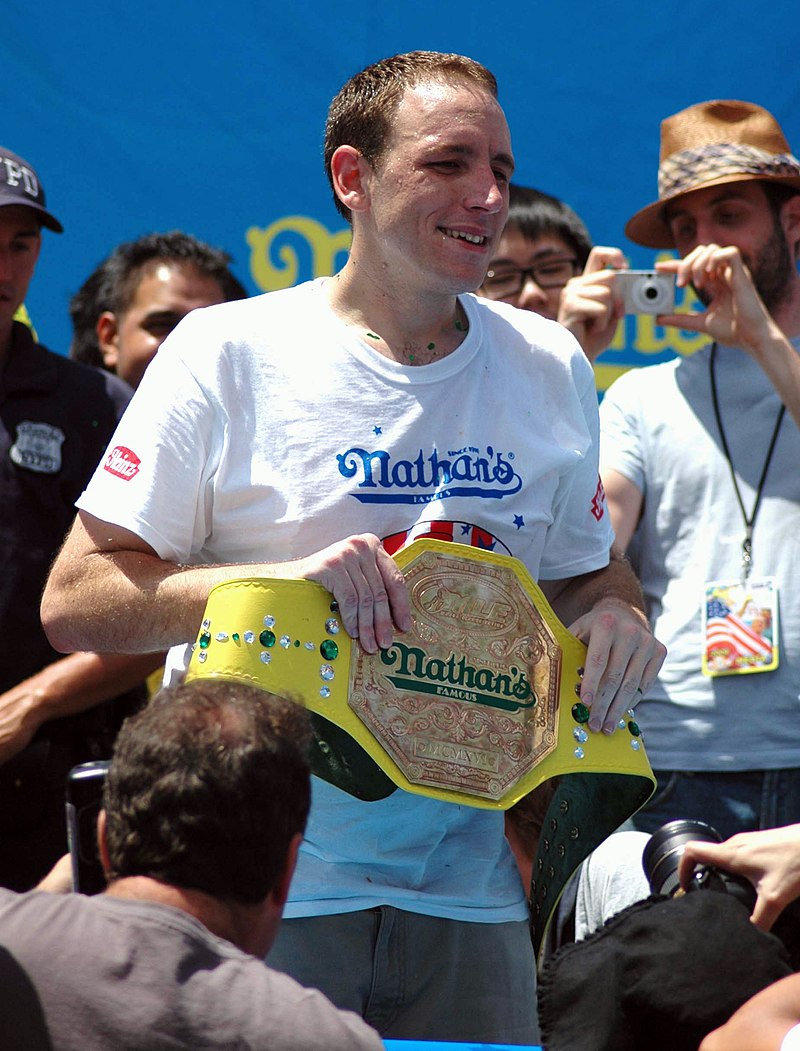
Ethan from Manhattan, USA, Joey Chestnut 2009, CC BY 2.0
Training sessions also include mental preparation and physical conditioning. Mental preparation helps maintain focus under pressure, while precise swallowing techniques ensure quick and safe consumption.
Competitive eating isn't just about eating a lot; it's about eating smart. By mastering these regimens and techniques, you can excel in the high-stakes world of competitive eating, pushing the boundaries of human capability.
Training Regimens
Engaging in competitive eating requires rigorous training regimens, often involving the consumption of large volumes of water or food multiple times a week. These practices aim to expand your stomach capacity, enabling you to ingest more food in shorter periods. The training is highly competitive and pushes your body to its limits.
However, it's crucial to acknowledge that such intense training can lead to severe health risks, including eating disorders and self-destructive behaviors. The enormous quantities of food and liquids can strain your digestive system, potentially leading to long-term health issues.
Moreover, the extreme nature of competitive eating training can cause serious injuries, such as gastric ruptures or dangerously low sodium levels, which can be life-threatening. It's essential to approach training with caution and prioritize your health. Balancing ambition with safety is key to succeeding in the demanding world of competitive eating.
Health Risks Involved
Understanding the health risks involved in competitive eating is crucial for anyone considering this extreme activity. Participation exposes you to several potential health issues. Excessive weight gain is a major concern, as the high-calorie intake can lead to obesity, which in turn increases the risk of chronic conditions such as diabetes and heart disease.
Stomach stretching is another critical issue. Consuming large quantities of food in short periods stretches your stomach beyond its natural capacity. Over time, this can lead to gastroparesis, a condition that impairs stomach muscle function and causes severe digestive problems.
Excessive water consumption, often used to aid in swallowing large amounts of food, can result in water intoxication. This potentially life-threatening condition can cause seizures and even coma.
Extreme food intake can also lead to stomach muscle contractions, resulting in ulcers, indigestion, nausea, and vomiting. Given these health risks, it's important to weigh the potential consequences carefully before engaging in competitive eating. Your health should always come first, regardless of the allure of breaking records.
Record-Breaking Feats
Despite the health risks, competitive eating contests continue to captivate audiences with astonishing record-breaking feats. Witnessing a competitor like Joey Chestnut devour 76 hot dogs in 10 minutes at the Nathan's Famous Hot Dog Eating Contest is nothing short of jaw-dropping. Miki Sudo also made headlines by setting a new world record in the women's division of the same contest, consuming 48.5 hot dogs in 10 minutes.
These competitors aren't limited to hot dogs. Matt Stonie, another celebrated name in the field, shattered records by eating 255 Peeps in five minutes and completing the 'In-N-Out 50x50 Burger Challenge.' Takeru Kobayashi, a pioneer in the sport, has set numerous records for eating large amounts of food in various timed challenges. These feats highlight the extreme lengths to which competitive eaters go to outdo their rivals.
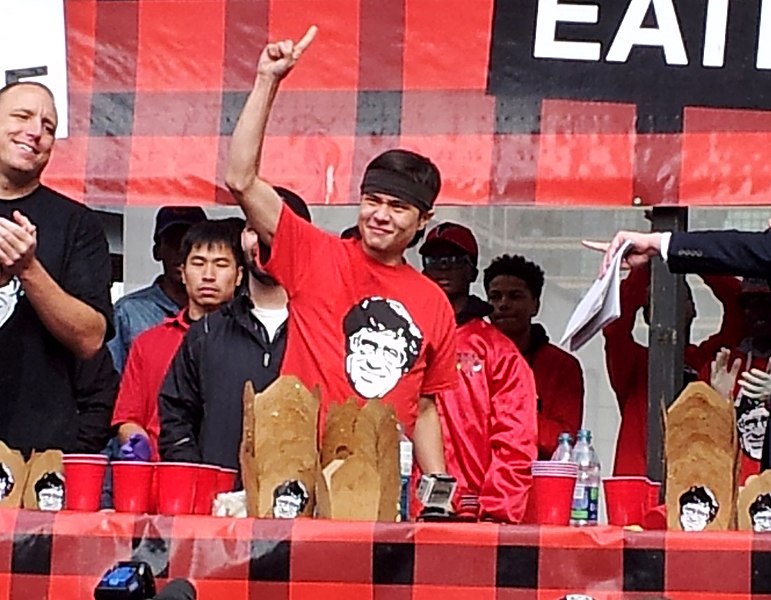
Atomicred, Matt Stonie, CC BY-SA 4.0
Here's a snapshot of some record-breaking performances:
| Competitive Eater | Record Feat | Amount of Food Consumed |
|---|---|---|
| Joey Chestnut | Hot Dog Eating Contest | 76 hot dogs in 10 minutes |
| Miki Sudo | Women's Hot Dog Contest | 48.5 hot dogs in 10 minutes |
| Matt Stonie | Peeps Challenge | 255 Peeps in 5 minutes |
These records showcase the extraordinary capabilities of competitive eaters and their relentless pursuit of breaking boundaries.
Strategies for Success
To excel in competitive eating, you must master strategies that enhance speed, efficiency, and stomach capacity. One critical technique is the 'Solomon technique,' where you divide food into smaller pieces. This method allows for more efficient consumption and better handling of eating challenges. Speed is crucial in these contests, so learning to swallow without extensive chewing can save valuable seconds.
Managing stomach capacity is another essential aspect. Top competitors often train by gradually expanding their stomachs through daily exercises and increasing their food intake. This training enables you to handle the large quantities required in contests. High-volume eating during practice sessions significantly enhances performance.
Mental focus and endurance are also key components. Staying calm and maintaining a steady pace can help you endure longer eating challenges. By balancing these elements, you can outperform opponents and secure victory.
Future of Competitive Eating
The future of competitive eating will be shaped by technological advancements in training methods, stricter health and safety regulations, and global expansion. Expect more sophisticated tools to help eaters enhance their skills and prepare more efficiently. Additionally, international events will draw diverse participants and audiences, elevating the sport to new heights.
Technological Advancements in Training
Competitive eaters are harnessing advanced technologies like virtual reality (VR) simulations and wearable devices to elevate their training and performance. You can now engage in a VR simulation of a high-stakes eating contest, allowing you to practice under realistic conditions without leaving your home. Wearable technology, including smartwatches and fitness trackers, enables you to monitor your eating speed and performance in real-time, offering immediate feedback and data for improvement.
Virtual coaching apps are revolutionizing training by providing personalized plans and nutritional guidance tailored to your specific needs. These apps assist in refining techniques, managing intake, and mentally preparing for competitions.
Here are the key technological advancements transforming competitive eating training:
- Virtual Reality Simulations: Practice in a virtual contest environment to replicate real competition pressure.
- Wearable Technology: Monitor metrics like eating speed and heart rate.
- Virtual Coaching Apps: Receive customized training plans and nutritional advice.
- Food Volume Calculators: Optimize food intake for peak performance.
- Calorie Tracking Apps: Ensure efficient energy intake to meet your needs.
These technologies collectively provide a comprehensive approach to enhance training, ensuring competitive eaters can perform at their best.
Health and Safety Regulations
While technology enhances training, the health and safety of competitive eaters remain paramount. Organizations such as the International Federation of Competitive Eating (IFOCE) and the Association of Independent Competitive Eaters (AICE) have implemented rigorous health and safety regulations to protect participants. On-site medical personnel are always available to address any immediate health concerns, ensuring contestants receive prompt medical attention if needed.
These events have stringent rules on food consumption to prevent potential choking hazards or overconsumption. Contestants' health is closely monitored during the event and in the aftermath to identify any delayed complications. Organizers, including prominent figures like George Shea, actively discourage excessive training and extreme eating habits to mitigate serious health issues such as obesity, eating disorders, and gastrointestinal problems.
The evolving safety protocols in competitive eating prioritize participant well-being, ensuring that the excitement of the competition doesn't come at the expense of their health. By adhering to these regulations, the sport aims to maintain a safe environment for all involved.
These measures emphasize the importance of balancing the thrill of competition with robust health and safety practices.
Global Expansion of Competitions
Competitive eating has rapidly gained global popularity, with major events now held in over 100 locations worldwide. This expansion has introduced diverse eating contests to new audiences, featuring a variety of foods from hot dogs to local delicacies. The International Federation of Competitive Eating (IFOCE) plays a pivotal role, awarding nearly $400,000 in prize money annually to top competitors.
No longer just an American phenomenon, competitive eating has seen organizations like the All Japan Competitive Eating (AICE) establish their own rules and traditions, such as prohibiting the dunking of food in water during competitions. This helps maintain their unique competitive eating culture while still pushing the limits of participants.
As interest continues to grow, the future of competitive eating looks promising. The potential for more events, increased prize money, and broader participation is evident.
- More international venues: Events are expanding into new countries, introducing competitive eating to fresh audiences.
- Increased prize money: With rising popularity, sponsors are offering larger financial incentives.
- Diverse food challenges: Competitions now feature a wide variety of foods beyond hot dogs.
- Intense training regimes: Competitors are adopting rigorous practices to improve performance.
- Stricter regulations: Ensuring fair play and safety remains a priority.
Competitive eating's global reach and evolving dynamics promise an exciting future for fans and participants alike.
Frequently Asked Questions
How Do Competitive Eaters Hold so Much Food?
Competitive eaters consume large quantities of food by rigorously training to expand their stomach capacity. They break food into smaller pieces, swallow without chewing, control their breathing, and use water to help wash it down. Eating quickly and efficiently is crucial to maximizing intake.
What Is the Dark Side of Competitive Eating?
The dark side of competitive eating includes severe health issues such as obesity, gastrointestinal problems, and eating disorders. Mental health can also suffer, with anxiety, stress, and body image issues being common among participants.
Do Competitive Eaters Throw up After?
Yes, competitive eaters sometimes throw up after contests due to the extreme stress on their bodies. Known as a 'reversal of fortune,' this can lead to disqualification. To avoid this, they employ strategies like pacing themselves and selecting easily digestible foods.
What Are the Rules for Competitive Eating?
Rules for competitive eating typically include prohibiting the dunking of food in water, disallowing vomiting, and adhering to strict time limits. Judges enforce these rules to ensure fairness and determine winners based on established criteria.
Conclusion
Competitive eating contests push the limits of human capability. Through rigorous training and strategic techniques, these athletes showcase remarkable speed and endurance.
Despite health risks, the drive to break records and achieve greatness propels them forward. As the sport evolves, new milestones will be reached in food challenges.
Stay tuned to be amazed by the next wave of competitors.