Cave Diving: Exploring Underwater Caves
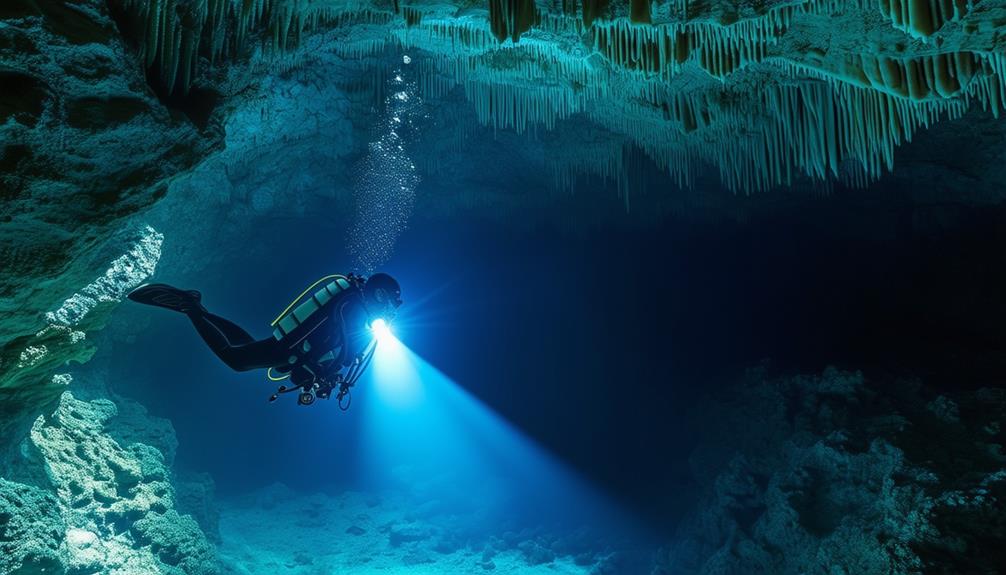
Descending into an underwater cave, guided solely by the beam of your torch, presents an experience that is as enigmatic as it is inviting. Navigating these submerged labyrinths requires masterful buoyancy control and meticulous management of guide lines. Cave diving transcends mere thrill-seeking; it demands thorough preparation, extensive training, and an unwavering commitment to safety protocols.
Essential skills include advanced navigation, precise communication, and emergency management. Critical equipment comprises specialized dive lights, redundant air supply systems, and reliable guide lines.
Let's explore the complexities that make this extreme sport both challenging and rewarding.
Key Takeaways
- Cave diving involves underwater exploration that demands rigorous preparation and specialized training.
- Skills required include buoyancy control, line management, and navigation in complete darkness.
- Essential equipment encompasses redundant air supply systems, dive lights, and guideline reels.
- Safety protocols entail thorough equipment checks, a dependable buddy system, and a comprehensive emergency plan.
- Premier cave diving locations are Mexico's cenote systems, Florida's underwater springs, and Mediterranean Sea caves.
What Is Cave Diving?
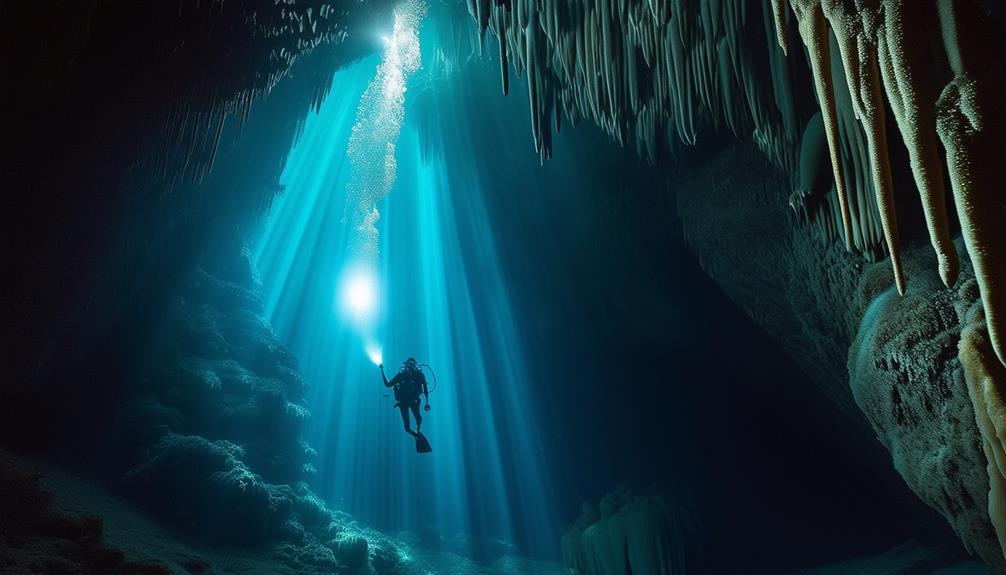
Cave diving is a specialized form of scuba diving that involves exploring underwater caves. Unlike traditional open water diving, cave diving presents unique challenges, such as confined spaces, limited visibility, and intricate passageways. Due to these hazards, specialized training is essential to prepare divers for the specific risks they'll encounter.
One key aspect of cave diving is the use of a continuous guideline, which serves as a lifeline to ensure divers can find their way back to the exit. These guidelines are crucial because the overhead environment in caves prevents a direct ascent to the surface, increasing the risk of becoming disoriented and lost.
Navigating underwater caves requires not only physical skill but also mental fortitude. Divers must remain calm and focused, especially in tight or complex areas where movement is restricted. The continuous guideline helps manage stress by providing a reliable reference point. Ultimately, cave diving combines the excitement of exploration with the necessity for rigorous preparation and precision.
Essential Skills and Equipment
Mastering essential skills and possessing the right equipment are vital for successful and safe cave diving. Key skills include buoyancy control, navigation in total darkness, and line management techniques, all of which are necessary for maneuvering through intricate underwater cave systems.
Training plays a significant role in preparing divers for these challenges. Comprehensive training programs cover equipment selection, gas management, communication techniques, and emergency procedures. Certification courses ensure competence and safety, which are crucial in such demanding environments.
Essential equipment for cave diving includes redundant air supply systems to provide a backup in case of primary failure. Dive lights are indispensable for visibility in the pitch-black conditions of underwater caves. Guideline reels help maintain orientation and ensure safe navigation back to the entrance.
Prioritizing safety is imperative. Using the correct equipment and continually honing your skills through training and experience is key. By following established protocols and staying current with the latest techniques, you enhance both safety and enjoyment while exploring these fascinating underwater worlds.
Safety Measures
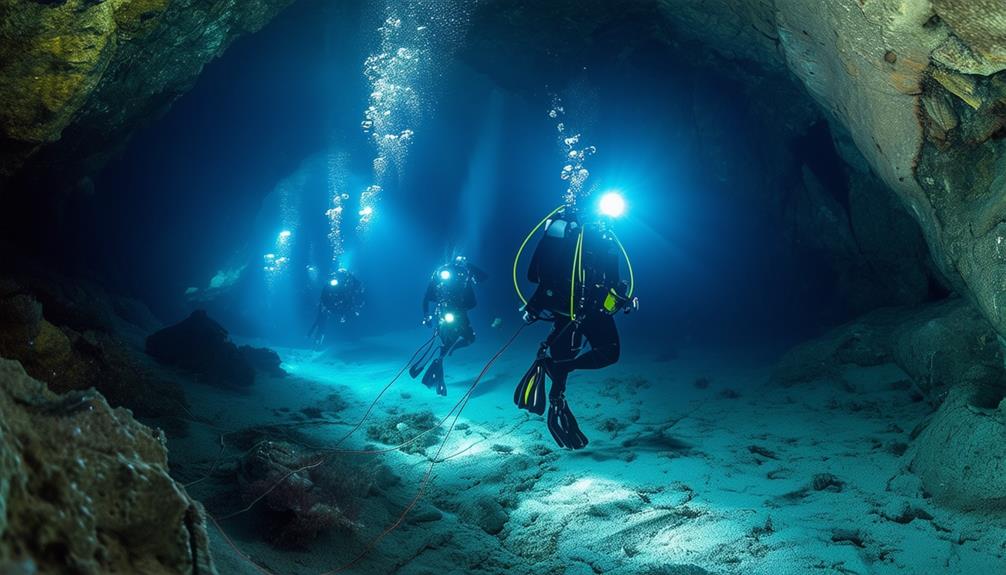
For safe underwater cave exploration, there are key steps to follow. Ensure thorough equipment checks and inspect and test all gear before entry to prevent equipment failure. Rely on a dependable buddy during your dive. Trust your partner and adhere to pre-arranged emergency procedures to handle unforeseen situations. Have a solid emergency plan in place to ensure a safe and successful exploration.
Equipment Check Protocols
Thoroughly inspecting your scuba gear before each dive is crucial for safety and preventing equipment failures, especially in underwater caves. A detailed equipment check protocol ensures your gear is in optimal condition. Verify that your regulators, tanks, dive computers, and lights are all functioning properly. Look for signs of wear, leaks, or any malfunctions that could jeopardize your safety.
Redundant equipment is essential in cave diving. Always carry backup lights, regulators, and dive computers. This redundant gear acts as a critical safety net in the event of primary equipment failure. Properly functioning equipment also helps maintain buoyancy control, which is vital in the confined spaces of underwater caves.
Here's a quick equipment check protocol guide:
| Task | Description |
|---|---|
| Inspect Regulators | Check for wear and ensure smooth airflow |
| Test Dive Computer | Confirm battery life and settings |
| Check Lights | Ensure primary and backup lights are working |
Following these equipment check protocols not only enhances your safety but also boosts your confidence underwater. Knowing your scuba gear is reliable allows you to focus on exploring the cave rather than worrying about potential equipment failures. Always remember, preparation is key to a successful and safe cave diving expedition.
Buddy System Importance
After confirming your gear is in top condition, it's equally important to understand the significance of the buddy system in cave diving. This practice is a critical safety measure that ensures continuous communication and mutual assistance between you and your diving partner. In the challenging environment of underwater caves, having a buddy means you have someone to rely on for navigation, gas management, and problem-solving.
Effective communication is key. Hand signals and light cues help you and your buddy stay synchronized, preventing misunderstandings that could lead to dangerous situations. By staying close and maintaining eye contact, you can quickly alert each other to any issues, whether it's an equipment failure or a navigational error.
Moreover, the buddy system enhances safety by providing immediate backup in emergencies. If something goes wrong, your buddy can offer immediate assistance, such as sharing air or helping with malfunctioning equipment. This mutual support is crucial for reducing risks and ensuring both of you can safely resurface. In cave diving, the buddy system isn't just a recommendation—it's an absolute necessity for your safety and success.
Emergency Plan Essentials
Developing a comprehensive emergency plan is crucial for addressing potential hazards in cave diving and ensuring a safe return to the surface. Your emergency plan should include procedures for common issues such as gas supply problems, equipment failures, entanglement, and disorientation. Clear communication methods and effective signaling systems can make a critical difference in emergencies. Assigning designated roles to each dive buddy ensures everyone knows their responsibilities in a crisis.
Gas supply problems are one of the most critical issues you might face. Always monitor your gas levels and communicate any concerns immediately. In the event of equipment failure, such as a malfunctioning regulator, you should know the steps to switch to a backup system swiftly. Regular practice of these procedures ensures you can act without hesitation.
Entanglement and disorientation are other potential hazards. Maintain a sharp eye on your guidelines and practice disentangling techniques. Regular drills on emergency protocols, including handling lost guidelines, can significantly reduce risks.
Training and Certification
To safely explore underwater caves, obtaining proper training and certification is essential. Various training agencies offer progressive courses designed to equip you with the necessary skills for underwater cave exploration. As a cave diver, you'll learn to navigate these challenging environments while minimizing inherent risks.
Certification courses generally cover several key areas:
- Equipment Selection: You'll be trained in selecting and maintaining specialized gear suited for cave diving.
- Gas Management: Courses teach you how to calculate gas consumption and handle potential gas-related emergencies.
- Communication Techniques: You'll practice non-verbal signals and line management skills to ensure clear communication in total darkness.
Training also emphasizes emergency procedures, such as handling gas supply problems and navigating back to safety. Self-taught approaches are highly discouraged due to the significant risks involved. Professional training ensures you develop competence in essential skills, thereby reducing the dangers associated with underwater cave exploration.
Popular Cave Diving Locations
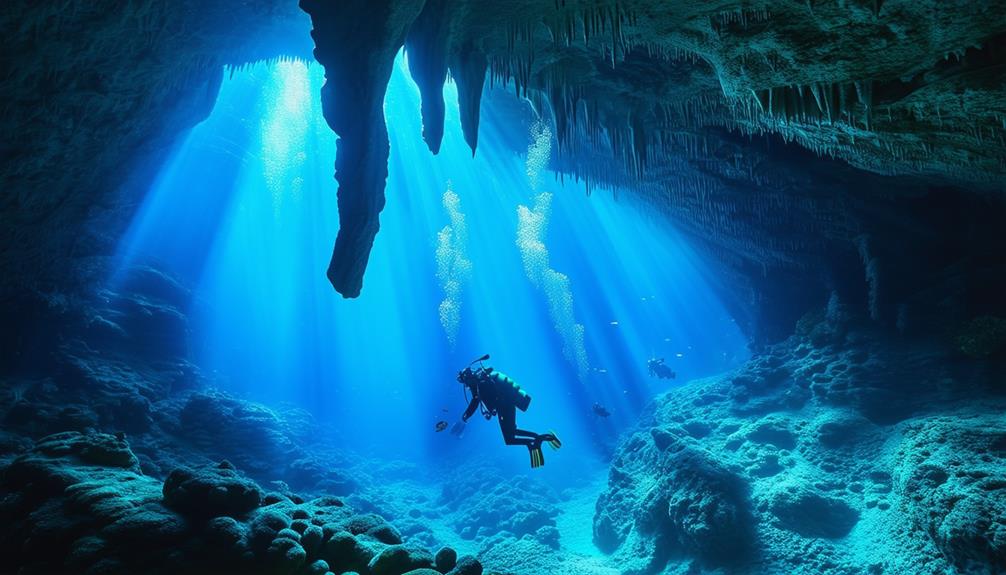
Now that you're ready to explore, let's look at some popular cave diving locations. Mexico's cenote systems feature intricate underwater passages that are truly breathtaking. Florida's underwater springs and the Mediterranean Sea's caves also offer incredible experiences.
Mexico's Cenote Systems
Mexico's Yucatán Peninsula boasts some of the world's most enchanting cenote systems, ideal for thrilling cave exploration. These natural sinkholes, with their mix of fresh and saltwater, reveal stunning landscapes and unique rock formations, drawing adventurers from around the globe.
When exploring Mexico's cenotes, you'll encounter:
- Dos Ojos: Known for its twin cenotes, this site offers extensive underwater passageways and breathtaking stalactite formations.
- Tajma Ha: Famous for its light effects, where beams of sunlight pierce the water, creating magical visuals.
- The Pit: One of the deepest cenotes, offering ethereal views with its crystal-clear waters and impressive depth.
These popular sites are just a glimpse of what the Yucatán Peninsula has to offer. Whether you're a beginner or an advanced explorer, the diverse ecosystems and intricate passageways cater to all skill levels.
Each adventure into these cenotes feels like venturing into a hidden world, where every turn reveals new wonders. Gear up and prepare to be amazed by the underwater marvels of Mexico's cenote systems.
Florida's Underwater Springs
Florida's underwater springs offer some of the most captivating cave diving experiences, featuring crystal-clear waters and intricate limestone formations. These submerged caverns mesmerize with their beauty and complexity. Among the top destinations, Ginnie Springs stands out with its extensive network of interconnected caves, providing both novice and experienced divers with thrilling adventures.
Next, venture to Devil's Eye Spring, where the water clarity resembles liquid glass. The submerged caverns here are breathtaking, with tunnels and passageways that challenge even seasoned cave divers. Specialized training and equipment are essential to navigate these intricate systems safely.
Don't miss Blue Grotto, a site offering a blend of open-water and cave diving experiences. Its large, submerged caverns are perfect for divers looking to explore deeper. Blue Grotto's diverse underwater landscapes make it a must-visit for any cave diving enthusiast. Florida's springs not only offer incredible diving adventures but also support the state's rich biodiversity. Dive in and discover the magic of these underwater wonders.
Mediterranean Sea Caves
Shifting focus from Florida's springs, let's explore the mesmerizing underwater caves of the Mediterranean Sea. Known for their crystal-clear waters and stunning geological formations, these caves provide a haven for cave diving enthusiasts worldwide. Imagine yourself exploring the depths of these underwater marvels, encountering ancient artifacts, intricate rock formations, and diverse marine species.
Here are three popular cave diving locations in the Mediterranean Sea:
- Blue Hole, Malta: This iconic dive site features a dramatic underwater archway leading to a labyrinth of tunnels and caves, ideal for exhilarating exploration.
- Cova de Sa Campana, Spain: One of Spain's largest underwater caves, it boasts vast chambers and intricate passageways adorned with striking stalactites and stalagmites.
- Nereo Cave, Sardinia: A complex network of tunnels and caverns teeming with marine life, making it a paradise for underwater photography and exploration.
Cave diving in the Mediterranean Sea offers more than just adventure; it's an unforgettable experience that immerses you in a world of natural beauty and historical wonder. Whether you're a seasoned diver or new to the sport, these underwater caves promise thrilling encounters at every turn.
Hazards and Risks
When diving in underwater caves, you encounter significant hazards such as entanglement, disorientation, and equipment failure due to the complex environment. Cave diving is inherently risky, and these hazards are magnified by the absence of natural light, which can cause you to lose visual references and suffer from sensory deprivation.
Tight passages, low visibility, and strong currents further complicate your dive, increasing the likelihood of encountering these dangers.
You must also be mindful of serious health risks such as decompression sickness, oxygen toxicity, and hypothermia. Decompression sickness occurs when you ascend too quickly, causing nitrogen bubbles to form in your tissues. Oxygen toxicity can result from breathing high concentrations of oxygen at depth, leading to seizures or unconsciousness. Hypothermia is another concern, as prolonged exposure to cold water can dangerously lower your body temperature.
Proper training, equipment, and adherence to safety protocols are crucial for mitigating these risks. Always ensure your gear is in top condition and practice emergency procedures regularly. Using a guide line can prevent disorientation, and carrying redundant equipment helps manage potential failures. By following these safety measures, you can greatly reduce the hazards associated with cave diving.
Organizations and Resources

For anyone interested in cave diving, several organizations and resources are dedicated to providing the necessary training and support to ensure safe and successful exploration. The British Cave Diving Group (CDG) has been instrumental in pioneering mentoring programs that emphasize safety and skill development, ensuring divers are well-prepared for the unique challenges of underwater caves.
Sheck Exley, a notable American cave diving pioneer, laid the groundwork for formalized training programs. His focus on technical skills and risk management has shaped modern cave diving practices. Today, specialized training is available globally, with courses offered in locations like Florida, Mexico, and Australia. These courses cover advanced techniques and equipment, ensuring divers are equipped for different conditions.
Here's a quick look at what you can expect from these training programs:
- Skill Development: Accredited instructors teach activities like side mount and no-mount exploration, deep mixed-gas diving, and rebreather use.
- Safety Enhancements: Training includes the use of modern equipment such as valve manifolds, octopus second stages, and advanced lighting instruments.
- Global Opportunities: Courses are available worldwide, allowing you to learn and explore renowned cave systems.
These organizations and resources provide the foundation for a safe and thrilling cave diving experience.
Frequently Asked Questions
How Do Cave Divers Explore Underwater Caves?
Cave divers explore underwater caves using specialized scuba techniques, continuous guidelines, and advanced technology such as rebreathers and propulsion vehicles. They navigate through narrow passages and dark chambers to uncover hidden wonders with determination and skill.
What Are Underwater Caves Called?
Underwater caves are often referred to as caverns, grottos, or cavern zones. In Mexico's Yucatán Peninsula, they are specifically known as cenotes. These submerged passages frequently feature stunning geological formations like stalactites and stalagmites, similar to those found in dry caves.
What Is Cave Exploring Called?
Cave exploring is called 'spelunking' or 'caving.' When it involves underwater passages, it is referred to as 'cave diving.' Specialized training and equipment are essential for safely navigating these complex and hazardous environments.
What Is the Golden Rule of Cave Diving?
The golden rule of cave diving is to always use a continuous guideline for navigation. Following this guideline meticulously ensures you can safely exit the cave without getting disoriented or lost.
Conclusion
Embarking on a cave diving expedition offers the incredible opportunity to discover hidden underwater realms. With the right skills, equipment, and adherence to safety protocols, you'll navigate these captivating caves with confidence.
Proper training and certification are crucial, ensuring you're prepared for any challenges. So, gear up, prioritize safety, and dive into the thrilling depths of cave diving – it's an unforgettable experience.